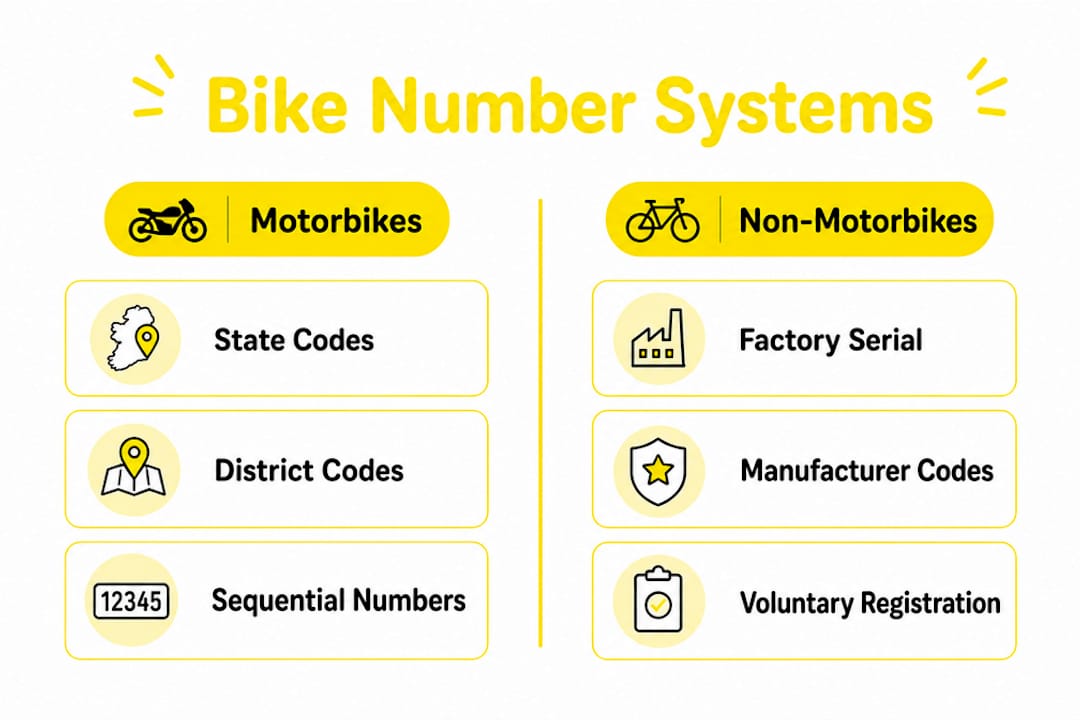
Bike registration numbers are assigned through two entirely separate systems depending on whether the bike has an engine. Motor-driven bikes receive government-issued alphanumeric registration numbers through the Regional Transport Office, following a fixed format tied to state and district codes. Non-motorized bicycles rely on factory-stamped serial numbers, which owners can voluntarily record in police or private databases for theft recovery. Understanding how bike registration numbers are assigned helps you stay compliant with Irish law, protect your investment, and recover your bike if it goes missing.
How are motorbike registration numbers assigned in Ireland?
Motorbike registration numbers in Ireland follow a standardized alphanumeric format: two state code letters, two district code digits, a series indicator of one to three letters, and a four-digit unique registration number. That structure means every plate carries encoded geographic and sequential information. A Garda can read the district of registration directly from the plate without running any database check.
The Regional Transport Office assigns these numbers sequentially within each district. When a new motorbike is registered, the next available number in the current series gets assigned to that vehicle. The number stays with the bike permanently unless the owner re-registers it in a different jurisdiction.
Districts with high vehicle volumes eventually exhaust their numeric sequences. When that happens, authorities move to alphabetical series, progressing from A through Z and then into double letters like AA, AB, and AC. This system allows each district to keep issuing unique numbers indefinitely without overlap.
High-Security Registration Plates, known as HSRP, are mandatory for new motorbikes in Ireland. HSRP plates carry security features that prevent number plate fraud and make tampering far more difficult than with standard plates. The result is a registration number system that is both traceable and resistant to forgery.
Key requirements for motorbike registration numbers:
- The plate must display the correct alphanumeric registration number assigned at the time of first registration.
- The number is permanent and does not change when the bike is sold within Ireland.
- HSRP plates are required for new registrations, adding a tamper-evident layer to the physical plate.
- The format must comply with Irish display regulations, including character height and reflective background standards.
- Displaying a fake or altered registration number is a criminal offense under Irish road traffic law.
Pro Tip: If you buy a used motorbike, verify that the plate matches the registration document before you ride. A mismatch is a red flag for cloned plates, and you do not want to be the one explaining that to the Gardaí.
For a deeper look at how motorbike plates differ from cars in Ireland, including HSRP requirements and display rules, that guide covers the full picture.
What role do serial numbers play for non-motorized bicycles?
Non-motorized bicycles do not receive government-assigned registration numbers. Instead, each bike leaves the factory with a serial number stamped on the frame, typically under the bottom bracket where the pedal cranks meet the frame. That number is the closest thing a regular bicycle has to an official identifier.
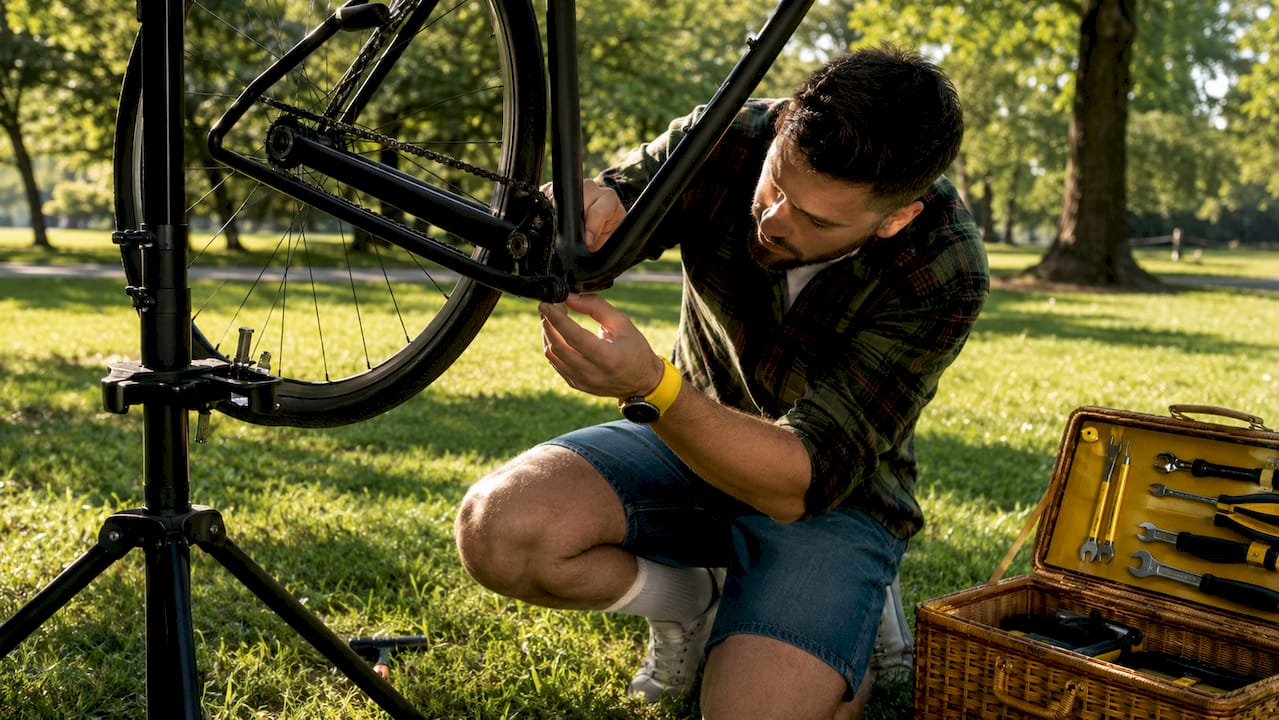
Serial numbers are not globally standardized. They vary by manufacturer and often encode the factory location, production year, and month of manufacture. Carbon fiber frames sometimes use adhesive decals rather than stamped numbers to avoid weakening the material, which means those numbers can be removed or damaged more easily.
Voluntary registration programs run by police agencies and private databases allow owners to record their serial number alongside their contact details. Registration is usually free through community programs, and it significantly improves the odds of recovering a stolen bike. The process takes about five minutes and requires only the serial number and basic owner information.
Here is how to register a non-motorized bicycle properly:
- Locate the serial number. Check under the bottom bracket first. If it is not there, look on the head tube, the rear dropout, or the chainstay.
- Photograph the number. Take a clear photo of the stamped or printed digits so you have a permanent record.
- Record it in a database. Submit the serial number and your contact details to a police-run or reputable private bike registry.
- Note any unique features. Record the brand, color, frame size, and any modifications. These details help police identify your bike even if the serial number is obscured.
- Engrave your ID if the serial is missing. If your bike has no readable serial number, engrave a unique owner ID such as your driver's license number on the frame and key components.
Pro Tip: Do not wait until after a theft to look for your serial number. Check it the day you buy the bike, write it down, and store that note somewhere other than your garage.
How do bike numbers work in professional cycling and racing?
Race numbers in professional cycling are assigned through a completely different system. They carry no legal weight and serve no registration purpose. Instead, they reflect competitive rank and team hierarchy within a specific event.
In major races, the defending champion receives number 1, with teammates assigned sequential numbers in the same block. Subsequent teams receive their own number blocks in order of team ranking. The system is symbolic and honor-based, not sequential or geographic like government registration.
Key points about race number assignment:
- Number 1 goes to the defending champion of the previous year's race.
- Teammates receive consecutive numbers within the same block, typically eight riders per team.
- Teams ranked lower in the standings receive higher number blocks.
- Numbers change each race and each season. They are not permanent identifiers.
- The system helps spectators and race officials identify riders instantly, especially in large pelotons.
This system contrasts sharply with the government-controlled bike registration number system. A race bib number tells you who won last year. A registration plate tells the Gardaí where and when the vehicle was first registered.
What are the practical compliance tips for bike owners?
Compliance with bike registration rules in Ireland depends on the type of bike you own. The rules are strict for motor-driven bikes and advisory for non-motorized ones, but both categories reward owners who take registration seriously.
For motorbike owners, the plate must be mounted correctly and remain visible at all times. Irish regulations specify character height, font, and reflective background requirements. Riding with a damaged, obscured, or non-compliant plate is asking to be pulled over. Newplates offers NCT compliant number plates that meet Irish display standards, as well as road legal 4D plates and 3D gel plates for riders who want a legal plate with a sharper look.
For non-motorized bicycle owners, voluntary registration is not legally required but is strongly recommended by police agencies. Keeping your registration details current, including your address and contact number, improves the chance of a recovered bike being returned to you.
Practical compliance steps every bike owner should follow:
- Register your motorbike with the correct authority before riding on public roads.
- Display your registration plate in the required position with no obstructions.
- Record your bicycle serial number and store it in at least two locations.
- Update your registry entry if you move address or change contact details.
- Use security markings or QR code labels on your bicycle frame for added traceability.
- Check your plate mounting security regularly to prevent loss or theft of the plate itself.
Pro Tip: Take a photo of your motorbike plate alongside the bike itself once a year. If the plate is ever stolen or damaged, that photo proves the correct registration and speeds up the replacement process.
Key Takeaways
Bike registration numbers in Ireland follow two distinct systems: government-assigned alphanumeric numbers for motor-driven bikes and voluntary serial number registration for non-motorized bicycles.
| Point | Details |
|---|---|
| Motorbike numbers follow a fixed format | State code, district code, series letters, and four sequential digits are assigned by the Regional Transport Office. |
| HSRP plates are mandatory for new motorbikes | High-Security Registration Plates prevent fraud and make registration numbers permanent and tamper-resistant. |
| Bicycle serial numbers are not standardized | Manufacturers encode production data differently, and carbon frames may use removable decals instead of stamped numbers. |
| Voluntary registration aids theft recovery | Recording your serial number in a police or private database is free and significantly improves recovery chances. |
| Race numbers are symbolic, not legal | Professional cycling assigns numbers by competitive rank, not by any government registration process. |
Why I think most bike owners misread the registration system entirely
Most people treat "bike registration" as one topic. It is not. The moment you mix up motorbike registration rules with bicycle serial number practices, you start making bad decisions, like assuming your bicycle is "registered" because you wrote the serial number in a notebook, or thinking your motorbike plate is optional because you once heard someone say bicycles do not need plates.
The confusion runs deep. I have spoken with motorbike owners who did not realize their registration number is permanent and does not reset when they sell the bike. They assumed the new owner would get a fresh plate. That is not how it works in Ireland. The number follows the vehicle, not the person.
The HSRP requirement is the single biggest security upgrade the registration system has seen in years. It closes a real gap. Before mandatory HSRP, cloned plates were a genuine problem. A criminal could copy your plate, commit a traffic offense, and you would receive the fine. HSRP makes that significantly harder.
For non-motorized bikes, the voluntary registration gap is where most owners lose out. The system works, but only if you use it before the theft, not after. Police agencies consistently report that registered bikes are recovered at a higher rate than unregistered ones. The five-minute effort to log your serial number is one of the highest-return security actions you can take as a cyclist.
My honest advice: treat your bicycle serial number with the same seriousness you give your motorbike registration. Both are your primary proof of ownership when things go wrong.
— Patrick
Newplates has your compliant motorbike plates covered
Once you understand how your motorbike registration number is assigned, the next step is making sure the physical plate displaying that number meets Irish legal standards.
Newplates produces standard NCT compliant plates that meet all Irish road traffic display requirements, starting from €15.99. For riders who want something with more visual presence, the road legal 4D number plates and 3D gel Irish plates deliver a sharper finish while staying fully compliant. Every plate is produced to the correct character height, reflective background standard, and font specification required under Irish law. Visit Newplates motorbike plates to find the right option for your bike.
FAQ
How are motorbike registration numbers assigned in Ireland?
The Regional Transport Office assigns motorbike registration numbers sequentially within each district, following a fixed alphanumeric format that includes state code, district code, series letters, and four unique digits. The number is permanent once issued and stays with the vehicle unless it is re-registered in another jurisdiction.
Where is the serial number on a non-motorized bicycle?
The serial number is most commonly stamped under the bottom bracket, where the pedal cranks meet the frame. Some manufacturers also place it on the head tube, rear dropout, or chainstay.
Is it legally required to register a bicycle in Ireland?
Non-motorized bicycle registration is voluntary in Ireland, not a legal requirement. Registering your serial number in a police or private database is strongly recommended because it improves theft recovery rates significantly.
What happens when a district runs out of registration numbers for motorbikes?
When a district exhausts its numeric sequence, authorities move to alphabetical series, starting with A and progressing through double letters like AA and AB. This allows each district to continue issuing unique registration numbers without duplication.
What are HSRP plates and why do they matter?
High-Security Registration Plates are mandatory for new motorbikes in Ireland and include tamper-evident security features that prevent number plate fraud. Once a registration number is assigned and an HSRP plate is issued, the number is permanent and extremely difficult to clone or alter.