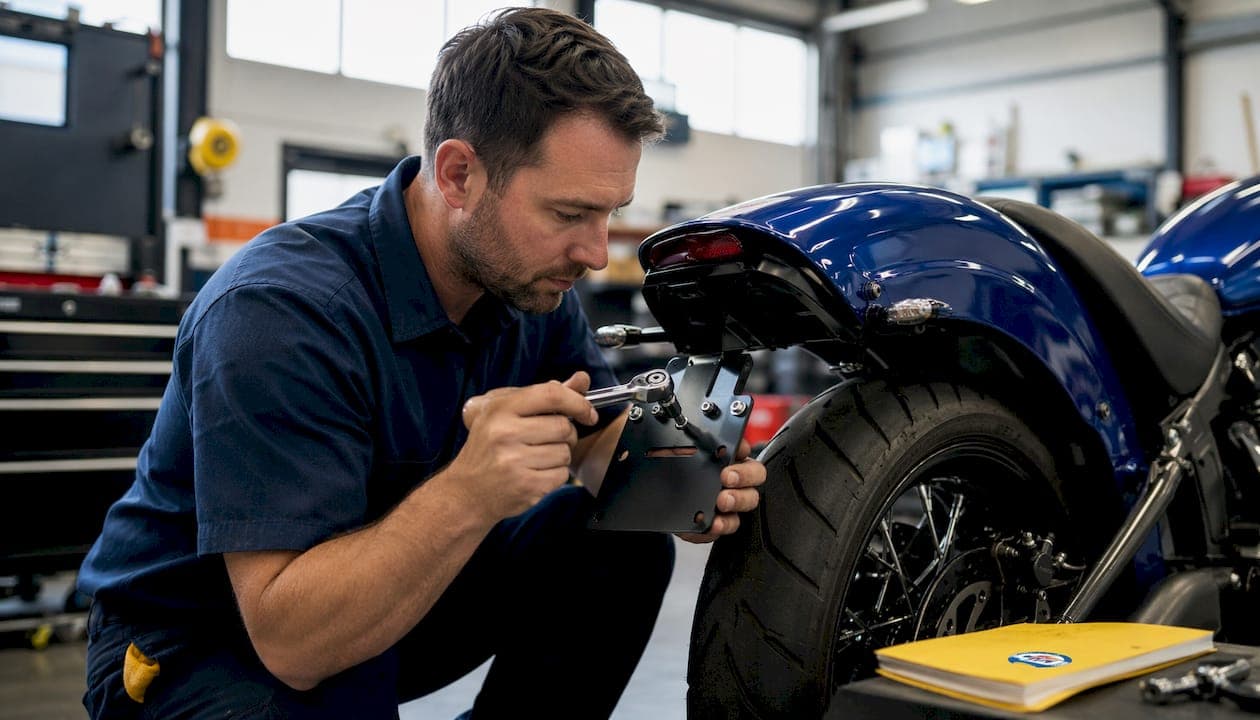
What is a motorcycle plate bracket?
A motorcycle plate bracket is the hardware, typically metal or plastic, that physically mounts your license plate to your motorcycle's frame or mudguard. It is not the registration plate itself. The bracket is the fitting that holds the plate in position, keeps it visible, and stops it rattling loose on the road.
That distinction matters more than it might seem. Your registration plate carries strict legal requirements under Irish law, specifically S.I. No. 318 of 1992, covering character size, reflective background, the EU flag with the IRL country code, and the county name in Irish at the top. The bracket has no such prescribed specification, but it must never compromise those plate requirements. A bracket that obscures the county name or shadows the reflective surface puts you on the wrong side of the law, regardless of how well it fits the bike.
Key things a proper motorcycle license plate mount must do:
- Hold the plate flat, stable, and fully visible at all times
- Avoid covering any legally required text, symbols, or the EU flag
- Allow the plate to be illuminated without casting shadows
- Attach securely enough that vibration cannot work it loose
- Mount without drilling through the plate's reflective surface
Brackets can be aftermarket or original equipment manufacturer (OEM) style, as long as the installation is secure and leaves the plate undamaged and fully legible.
Types of motorcycle license plate brackets you should know
Not all motorcycle plate holders are built the same, and the type you choose depends on your bike's frame design, your plate size, and how much you care about the finished look, as explained by Motorcycle Courier UK | Same Day Courier | Abundance by AY. Here is a breakdown of the most common options.
Universal brackets
Universal brackets are the most widely available option and usually the most affordable. They are designed to fit a broad range of motorcycles and plate sizes, but here is the catch: many are built around international plate dimensions that do not match Irish plate sizes exactly. You may need to drill new holes in the bracket itself (never the plate) to get a proper fit that does not obscure required details like the EU flag or county name.
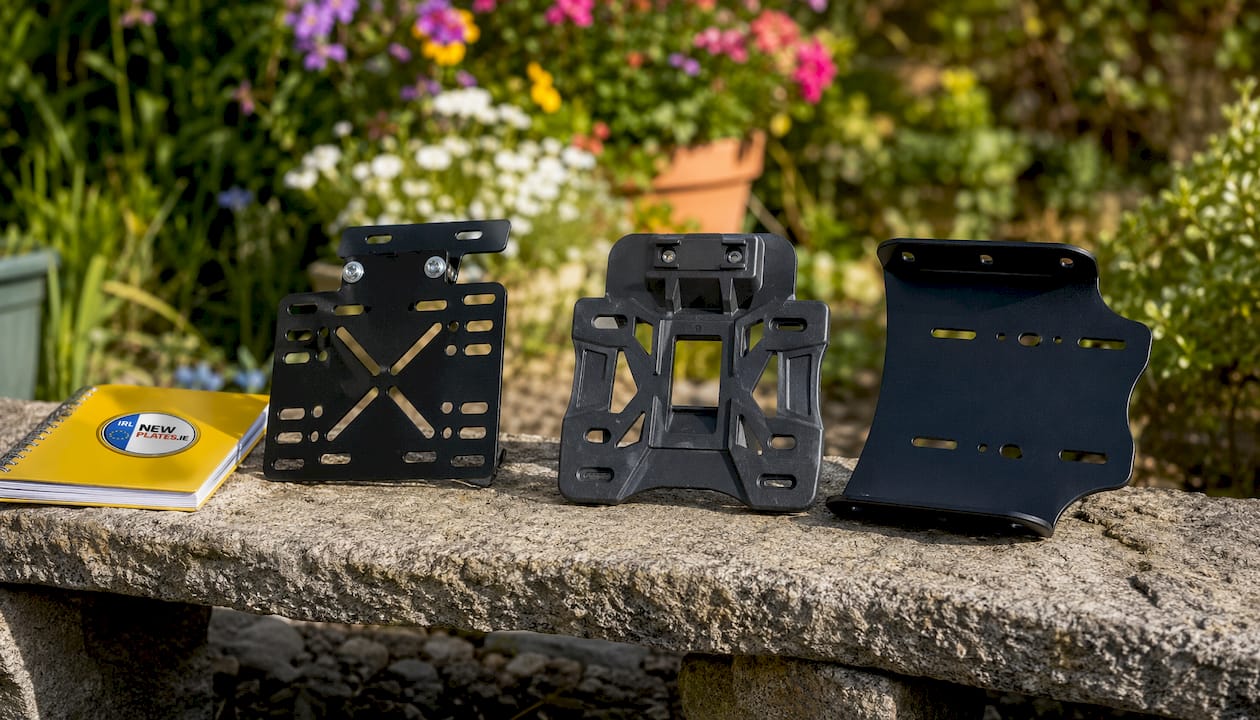
OEM-style replacement brackets
These replicate the original factory bracket for a specific make and model. Fitting is straightforward because the mounting points align with existing holes on the frame or mudguard. If your original bracket has cracked or corroded, an OEM-style replacement is the lowest-effort fix.
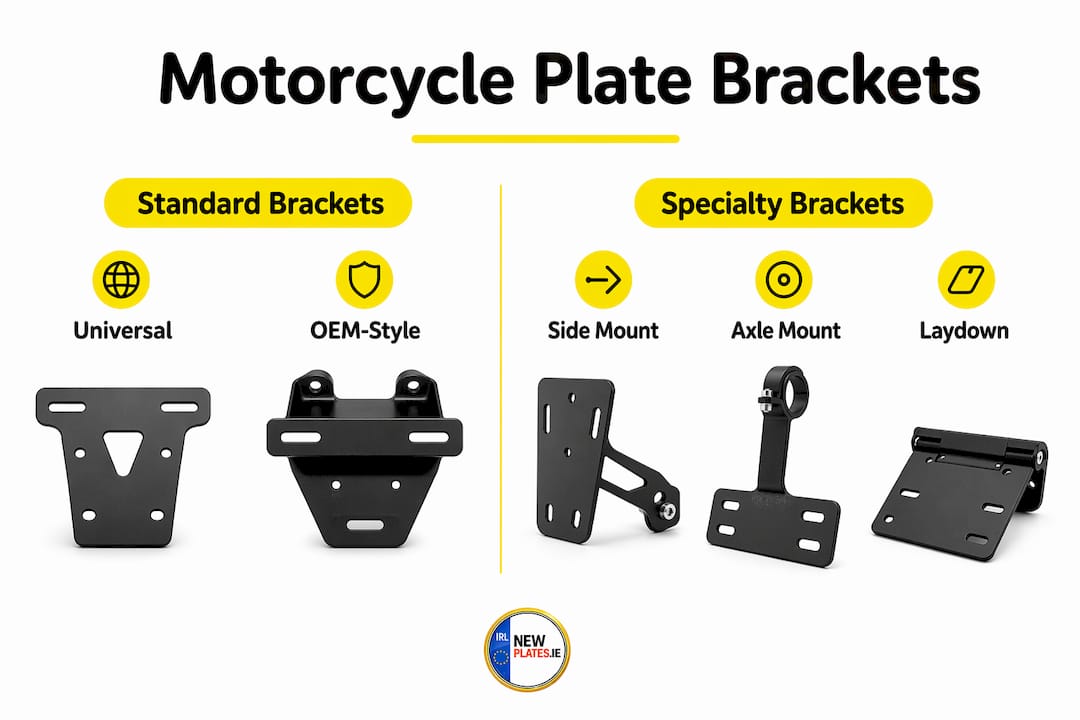
Side mount brackets
Side mounts relocate the plate from the rear center to one side of the bike, giving a cleaner, more custom look. They are popular on custom builds and café racers. The trade-off is that positioning must be very deliberate: the plate still needs to be clearly visible and properly illuminated, so a poorly placed side mount can create compliance problems quickly.
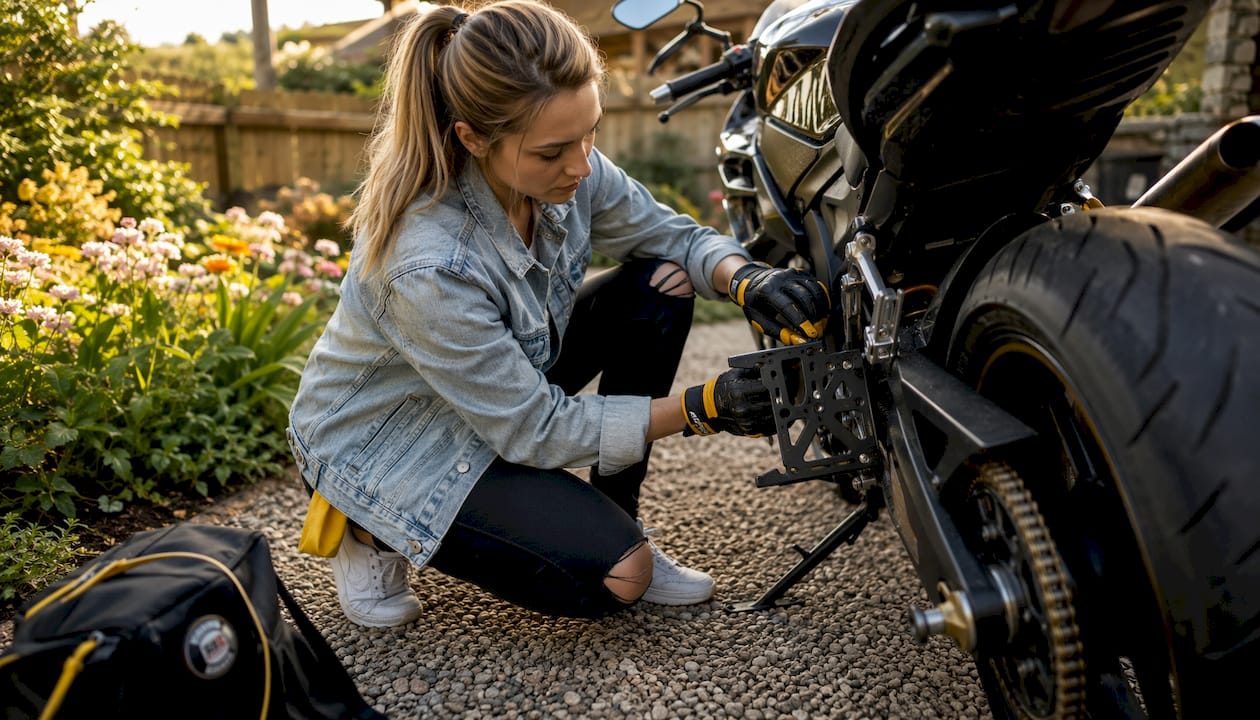
Axle mounts
Axle mounts attach directly to the rear axle rather than the frame or mudguard. They sit low and tight to the wheel, which suits stripped-back builds. Vibration is a real concern with axle mounts because road shock transmits directly through the wheel, so rubber washers between the bracket and plate are not optional here.
Laydown brackets
Laydown brackets angle the plate at a flatter, more horizontal position rather than the standard vertical. They are common on sport bikes where the tail section is short. Visibility from behind can suffer if the angle is too extreme, so check that the plate remains readable from a reasonable distance.
Custom and fabricated mounts
Fabricated mounts are welded or bolted to the frame as part of a custom build. They offer the most flexibility but require the most care around compliance. A welder can make anything look great; making it legal is a separate job.
| Bracket type | Material | Best suited for | Key consideration |
|---|---|---|---|
| Universal | Steel or plastic | Most standard bikes | May need bracket modification for Irish plate sizes |
| OEM-style | Steel | Factory replacements | Easiest fit, direct swap |
| Side mount | Aluminum or steel | Custom and café builds | Plate visibility and illumination must be verified |
| Axle mount | Aluminum | Stripped-back builds | Use rubber washers to absorb vibration |
| Laydown | Steel or aluminum | Sport bikes | Angle must not reduce rear visibility |
| Custom fabricated | Steel | Full custom builds | Compliance check required before road use |
How to mount a motorcycle plate bracket correctly
Getting the mounting right is where most problems either start or get avoided. The location you choose and the hardware you use both affect how long the bracket lasts and whether it stays legal.
Common mounting locations:
- Frame mounts: Bolted directly to the subframe or rear frame loop. Solid and stable, this is the most common approach on standard bikes.
- Mudguard mounts: Fixed to the rear mudguard. Works well when the mudguard is sturdy, but a flimsy plastic mudguard can flex and cause the plate to vibrate.
- Axle mounts: Attached at the rear axle. Low profile but high vibration exposure.
- Turn signal mounts: Some brackets integrate with the rear turn signal bolts. Convenient but load-bearing capacity is limited.
Installation steps and tips:
- Measure your Irish plate before buying any bracket. Many aftermarket options are sized for non-Irish plates and will need modification.
- Align the bracket so no part of it overlaps the EU flag, IRL code, or county name on the plate.
- Use rubber washers between the bracket and the plate. They absorb road vibration and protect the plate's reflective surface from cracking or peeling over time.
- Tighten fasteners firmly but not so hard that the plate warps. Stainless steel bolts resist corrosion better than standard zinc-plated ones.
- Check that the plate light illuminates the full face of the plate without the bracket casting a shadow.
Pro Tip: Before you ride, stand behind the bike at night and check that the plate is fully lit and readable. Irish law requires clear illumination, and a bracket that sits too high or too wide can shadow the plate enough to attract attention from the Gardaí.
Drilling holes in the plate itself is a mistake you want to avoid. It damages the reflective backing, which affects both legal compliance and how long the plate lasts. Drill the bracket, not the plate, if modification is needed. For a full walkthrough, the motorcycle fitting guide on the Newplates blog covers each step in detail.
Why the right bracket choice actually matters
A loose or poorly chosen bracket is not just an annoyance. It creates real problems, and some of them are expensive.
An insecure plate that vibrates loose means you are riding without a displayed registration mark. Irish authorities require the plate to be permanently legible and stably mounted at all times. Losing a plate on the road triggers the need for re-registration and replacement, which costs time and money on top of any fine. Fines for non-compliant plate display in Ireland can reach up to €5,000, so the cost of getting the bracket wrong is not trivial.
Beyond the legal side, vibration damage is a slow killer for both the bracket and the plate. A bracket that flexes constantly will eventually crack or loosen its fasteners. The plate itself can develop stress fractures around the mounting holes if rubber washers are not used. Replacing a plate because the bracket damaged it is an avoidable expense.
Poor bracket selection also tends to show up in visibility problems. A bracket that sits too wide, too high, or at the wrong angle can partially cover required elements on the plate. The county name in Irish and the EU flag are both mandatory, and obscuring either of them is a compliance failure regardless of how secure the bracket feels. Choosing a bracket sized for your specific Irish plate, rather than a generic international size, removes most of that risk from the start.
For more detail on securing your plate correctly to the frame, the 2026 securing guide on the Newplates blog is worth reading before you buy.
Irish legal requirements for motorcycle plate mounting
Irish law is specific about what a properly displayed motorcycle plate looks like, and the bracket is part of making that happen. Under S.I. No. 318 of 1992, plates must carry black characters on a white reflective background, display the EU flag with the IRL country code, and show the county name in Irish at the top. None of those elements can be obscured, shadowed, or damaged.
The plate must be clearly visible from the rear and illuminated at night. The bracket's position directly affects both of those requirements. A bracket that sits too close to the plate light can block illumination; one that extends beyond the plate edges can shadow the face.
Motorcycle plates in Ireland are not supplied by the state. You source them privately, which means the responsibility for getting both the plate and the mounting right falls entirely on you. Aftermarket brackets are perfectly legal, but they must allow secure, damage-free mounting without any modification to the plate's reflective surface. If a bracket requires you to drill the plate to fit, it is the wrong bracket for the job.
Riders using NCT-compliant plates from Newplates get plates built to the correct Irish dimensions, which makes finding a compatible bracket considerably easier since you are working from a known size rather than guessing.
Key Takeaways
A motorcycle plate bracket must hold your plate securely, visibly, and without covering any legally required text or symbols, or Irish law treats it as a compliance failure.
| Point | Details |
|---|---|
| Bracket vs. plate | The bracket is mounting hardware; the plate carries all legal requirements under S.I. No. 318 of 1992. |
| Irish plate sizing | Many universal brackets are sized for non-Irish plates; measure first and modify the bracket, never the plate. |
| Vibration protection | Rubber washers between the bracket and plate absorb road shock and prevent reflective surface damage. |
| Compliance risk | Fines for non-compliant plate display in Ireland can be substantial. |
| Illumination check | The bracket must not shadow the plate face; verify full illumination at night before riding. |