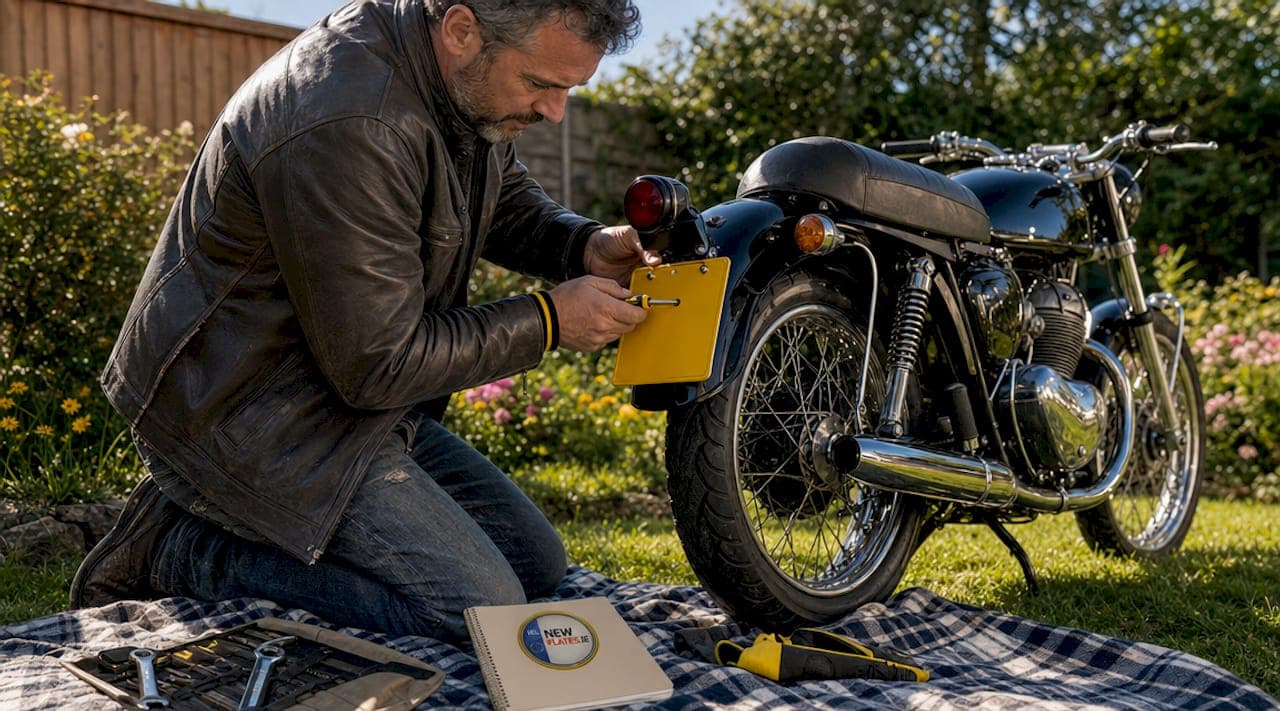
Fitting a number plate to a motorcycle is defined as the process of mounting a road-legal, compliant registration plate to your bike's rear in accordance with Irish regulations. Get it wrong and you are not just asking for a fine from the Gardaí. You are risking a failed NCT and a bike that cannot legally be ridden on Irish roads. This guide covers the legal requirements, the tools you need, a clear step-by-step installation process, and the mistakes that catch riders out every single time.
How to fit a number plate to your motorcycle legally in Ireland
Irish road law requires motorcycles registered on or after 1 September 2001 to display a plate at the rear only. Front plates are optional on older bikes registered before that date, but no newer motorcycle needs one. That single rule catches a surprising number of riders off guard, especially those coming from cars where front and rear plates are both mandatory.
The plate itself must meet specific standards. The rear plate requires a reflective yellow background with black characters, conforming to the relevant standards for legibility and visibility. BS numbers, manufacturer postcodes, and supplier details are mandatory on plates produced after 2001. These markings are not decorative. They allow authorities to trace the plate's origin and verify compliance during enforcement checks.
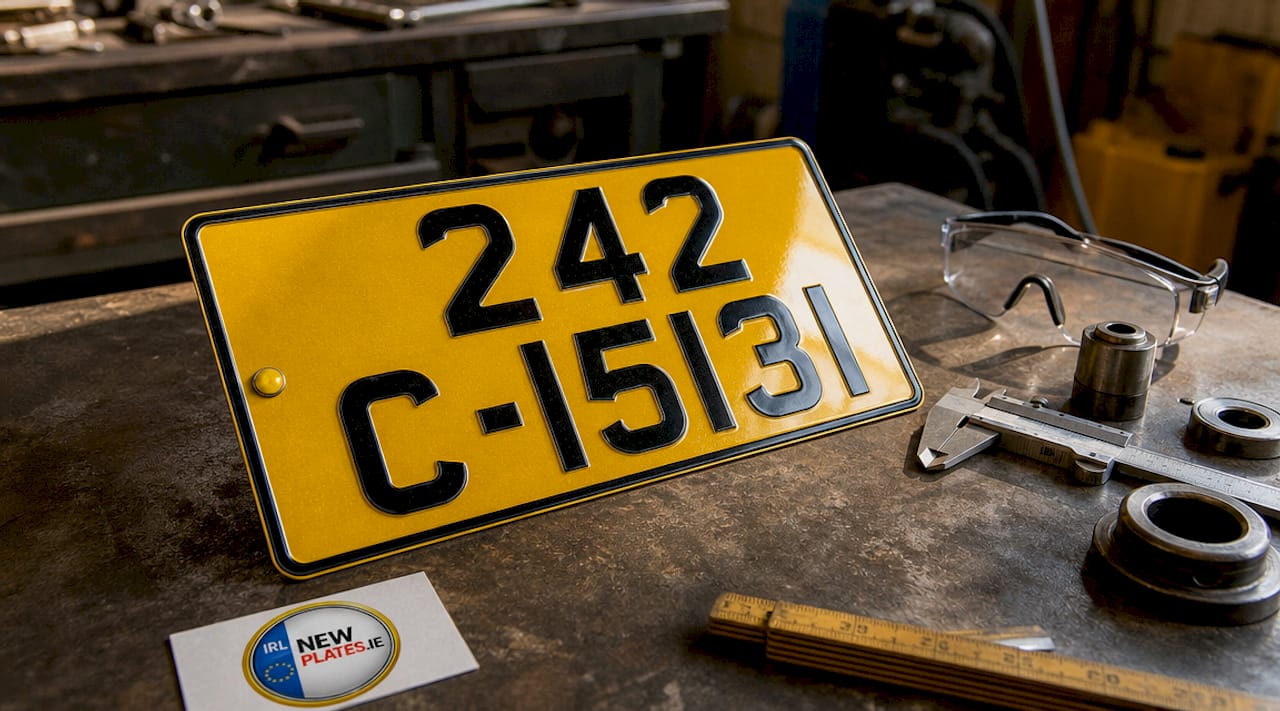
Character height, spacing, and margin dimensions are all regulated. The characters must be a specific height and stroke width, with defined gaps between individual letters and digits, between groups of characters, and between the characters and the plate edge. Plates that use non-standard fonts, compressed spacing, or decorative backgrounds fail these requirements immediately. Non-standard plates can be difficult for automated cameras to read, and misplaced or modified characters can trigger enforcement penalties even when the rider believes the plate looks fine.
What the plate must display
A compliant motorcycle number plate in Ireland must include:
- A reflective yellow background at the rear with black characters
- Characters in the correct font, height, and spacing as specified by regulation
- The plate supplier's name, postcode, and BS standard reference
- No tinted overlays, colored borders, or modifications that reduce legibility
- No flags, symbols, or graphics that obscure any part of the registration
Whether a front plate is required hinges almost entirely on the motorcycle's registration date. If your bike was registered before September 2001, you may choose to display one at the front. If it was registered after, leave the front clear.
What tools do you need to install a motorcycle license plate?
Preparing the right tools before you start saves time and prevents the kind of rushed mistakes that lead to misaligned or non-compliant plates. The essential tools for precise fitting are a measuring tape, a marker, a drill with appropriate bits, and a screwdriver. These four items handle the majority of installations on standard motorcycle mounting points.
Beyond the basic tools, you will need the right hardware for your specific bike. Number plate holders and brackets must be chosen to fit the motorcycle model and maintain compliance. A bracket designed for a street bike will not necessarily suit a cruiser or a trail bike. Compatibility matters both for a clean fit and for keeping the plate at the correct angle and position.
For fasteners, you have two main options: screws and bolts, or adhesive pads. Adhesive pads are popular but may not always comply with road regulations depending on how permanent and secure the bond is. Screws provide a more reliable, inspection-proof fixing. Whichever you choose, the plate must be secured firmly enough that it cannot shift, rattle, or detach during normal riding.
Pro Tip: Before drilling anything, hold the bracket and plate against the mounting point and check the fit visually. A two-minute dry run saves you from drilling in the wrong position.
Safety gear during installation is straightforward. Safety glasses protect your eyes when drilling, and gloves prevent cuts from sharp bracket edges. Neither takes more than ten seconds to put on, and both are worth it.
Step-by-step guide to installing a motorcycle number plate
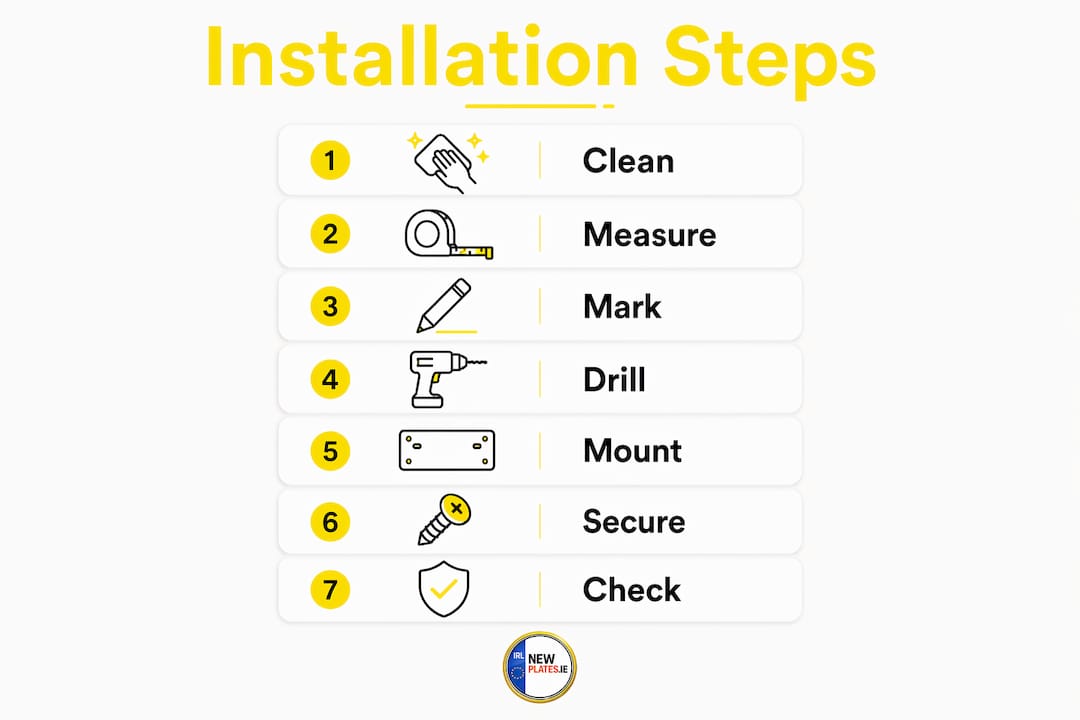
Follow these steps in order. Skipping ahead, particularly past the measuring and marking stages, is the most common reason plates end up crooked or non-compliant.
-
Clean the mounting area. Wipe down the rear of the motorcycle where the bracket will attach. Dirt and grease under a bracket cause it to shift over time, which affects plate alignment.
-
Check bracket compatibility. Hold your chosen bracket against the mounting point. Confirm it sits flat, aligns with the existing holes or surface, and positions the plate at a perpendicular angle to the ground.
-
Mark your drill points. Use a marker and measuring tape to mark drill points accurately. Measure twice. The plate must sit level and centered. Even a few millimeters of misalignment becomes obvious once the plate is on.
-
Drill the holes. Use a drill bit appropriate for your bracket material and the motorcycle's mounting surface. Drill slowly and steadily to avoid cracking plastic panels or stripping metal.
-
Attach the bracket. Secure the bracket to the motorcycle using the appropriate screws or bolts. Do not overtighten to the point of cracking the bracket, but make sure there is no movement when you apply pressure by hand.
-
Mount the number plate. Attach the plate to the bracket using screws or adhesive pads. If using screws, choose ones that are the correct length. Too long and they push through the face of the plate. Too short and they do not grip.
-
Check the angle and position. Proper mounting requires the plate to be perpendicular and easily legible. Step back and look at the plate from behind the bike at eye level. It should face directly rearward, not angled up or down.
-
Verify all markings are visible. Confirm the BS reference, supplier details, and registration characters are all fully visible and unobstructed by the bracket, fender, or any other bike component.
Pro Tip: Take a photo of the installed plate from ten meters behind the bike. If you can read the registration clearly in the photo, an automated camera will read it too.
| Step | Key action | Common error |
|---|---|---|
| Cleaning | Remove grease and dirt | Skipping leads to bracket shift |
| Marking | Measure twice before drilling | Misalignment from guessing |
| Drilling | Use correct bit size | Cracked panels from wrong bit |
| Mounting | Check perpendicular angle | Tilted plate fails camera detection |
| Verification | Confirm all markings visible | Bracket obscuring supplier details |
Common mistakes when fitting motorcycle number plates
The most damaging mistake is also the most deliberate. Bending the rear plate upward to avoid camera capture is a tactic some riders attempt. A May 2026 case resulted in a rider being charged after doing exactly this. The plate tilt was detected, and the legal consequences were significantly worse than any original offense the rider was trying to avoid. Do not do it.
Obstruction is another frequent problem. Parts of the motorcycle, including fenders, tail fairings, and license plate lights, can partially cover the plate if the bracket is not positioned correctly. The entire plate must be visible from directly behind the bike. Even a small overlap from a fender edge is enough to fail an NCT inspection.
A common misconception is that a smaller plate is acceptable as long as the characters are readable. It is not. The plate dimensions are fixed by regulation, and a plate that is physically undersized fails regardless of how clear the text appears. Similarly, some riders assume that a plate that looks fine to the human eye will satisfy automated cameras. Non-compliance is increasingly detected through camera enforcement, which means the Gardaí do not need to pull you over to identify a problem plate.
"A slight tilt or bend in the number plate can cause automated cameras to fail to capture the plate correctly. This is a common tactic but it is legally punishable." Motorcycle plate bending case, MK Society Report
Bracket incompatibility is also worth flagging. Not every aftermarket bracket fits every motorcycle model. Street bikes, cruisers, and dirt bikes all have different mounting configurations. Buying a generic bracket and forcing it to fit usually results in a plate that sits at the wrong angle or vibrates loose over time.
How to verify your plate meets compliance standards after installation
A post-installation check takes about five minutes and can save you from a roadside stop or a failed NCT. Work through this list before you ride:
- Color and reflectivity: The rear plate must have a yellow reflective background. Check it in natural light. A plate that looks yellow indoors can appear dull or non-reflective outside.
- Character spacing and size: Compare the character height and spacing against the regulatory specifications. If the characters look unusually small or tightly packed, the plate may be non-compliant.
- Supplier markings: Confirm the BS standard reference, manufacturer postcode, and supplier name are printed on the plate and fully legible. Manufacturers' stamps and BS numbers enable authorities to trace plate compliance and authenticity during enforcement.
- Plate angle: The plate must face directly rearward. Use a level or simply stand directly behind the bike and check by eye.
- Obstruction check: Walk around the rear of the bike and confirm no part of the motorcycle covers any portion of the plate.
If you are uncertain whether your plate meets the current standards, consult a trusted supplier before riding. Newplates stocks road-legal motorbike plates that are produced to the correct specifications, so you can check your plate against a known-compliant reference. Replacing a non-compliant plate before an NCT is always cheaper than failing the test and rebooking.
Key takeaways
Fitting a legal motorcycle number plate in Ireland requires a rear-only compliant plate, the correct tools and bracket for your bike model, and a perpendicular installation that passes both visual and camera-based enforcement checks.
| Point | Details |
|---|---|
| Rear-only plate rule | Motorcycles registered after September 2001 need a plate at the rear only. |
| Compliance markings matter | BS number, supplier postcode, and manufacturer details must appear on every legal plate. |
| Angle affects legality | A tilted or bent plate can fail camera detection and result in enforcement action. |
| Bracket compatibility | Choose a bracket designed for your specific motorcycle type to maintain correct positioning. |
| Post-install verification | Check color, spacing, angle, and obstruction before riding to avoid NCT failure. |
Why I think most riders underestimate the fitting stage
I have seen a lot of motorcycles with plates that are technically present but practically non-compliant. The plate is there, the registration is correct, but the bracket is slightly off, the angle is wrong, or the supplier markings are hidden behind a fender. Riders focus on getting the right plate and then treat the fitting as an afterthought. That is where things go wrong.
The camera enforcement point is the one that surprises people most. Many riders still assume that a non-compliant plate only becomes a problem if a Garda physically stops them and checks. That assumption is outdated. Automated systems read plates constantly, and a plate that is tilted, obscured, or non-standard gets flagged without any human involvement. The enforcement risk is real and it is growing.
My honest advice is to treat the fitting process with the same care you give to the plate itself. Measure before you drill. Check the angle before you tighten. Verify the markings are visible before you ride. It takes an extra ten minutes and it is the difference between a bike that is genuinely road-legal and one that is one camera flash away from a fine.
If you are sourcing a new plate, buy from a supplier that produces plates to the correct standard and can confirm compliance. Newplates does exactly that, and their motorbike plate range gives you a solid starting point before you even pick up a screwdriver.
— Patrick
Get a compliant motorcycle plate from Newplates
Newplates makes it straightforward to get a road-legal motorcycle number plate that meets Irish standards without the guesswork. Their range includes standard NCT-compliant plates and custom options, all produced to the correct specifications for rear display on Irish roads.

Whether you need a standard replacement or something with a bit more personality, Newplates has options starting from €15.99. Their custom motorcycle plates are built to comply with regulations while giving you room for personal expression. Every plate comes with the mandatory supplier markings already printed, so you are not left wondering whether your plate will pass inspection. Order online, fit it correctly using the steps above, and ride with confidence.
FAQ
Do motorcycles in Ireland need a front number plate?
Motorcycles registered on or after 1 September 2001 are required to display a plate at the rear only. Front plates are optional on bikes registered before that date.
What tools do I need to fit a motorcycle number plate?
A measuring tape, marker, drill, and screwdriver cover most installations. You will also need a compatible bracket and either screws or adhesive pads rated for road use.
Can I use adhesive pads instead of screws to mount my plate?
Adhesive pads are a common option, but they must create a permanent and secure bond. A plate that shifts or detaches during riding fails compliance and can result in enforcement action.
What happens if my motorcycle plate is tilted or bent?
A tilted plate can cause automated cameras to fail to read the registration correctly. This is treated as a deliberate modification and can result in charges, as demonstrated in a May 2026 enforcement case.
How do I know if my number plate is NCT compliant?
Check that the plate has a yellow reflective background, correct character sizing and spacing, and visible supplier markings including the BS standard reference and manufacturer postcode. When in doubt, compare against a plate from a verified supplier like Newplates.