Custom show plates are personalized number plates featuring photographic images, logos, or bespoke designs, built specifically for vehicle exhibitions and display events. In Ireland, even plates used purely for shows must meet certain legal standards if they are fitted to a vehicle on a public road. The three main plate types you will encounter are Road Legal 4D Number plates, which use raised acrylic lettering for striking visual depth; Road Legal 3D Gel Irish Number Plates, which offer a domed, textured finish; and Standard NCT compliant number plates, which satisfy the baseline requirements for the National Car Test.
Before you photograph a custom plate for shows or drive to the venue with it fitted, confirm it meets these Irish legal essentials:
- Legibility: Characters must be clearly readable at a distance, with correct font and digit height per Irish Road Traffic regulations.
- Reflective background: White at the front, yellow at the rear, with the correct reflective grade material.
- Size: Standard Irish plates measure 520mm x 111mm for most cars; deviations require approval.
- Material: Plates must be made from a rigid, durable substrate, not paper or card.
- NCT compliance: If the vehicle will be driven to or from the show, the plate must pass NCT inspection standards.
Show-only plates displayed off the vehicle are not subject to road-use rules, but road-legal plates give you far more flexibility on the day.
Table of Contents
- What materials and production methods give you the best show plates?
- How to photograph custom plates for shows with sharp, professional results
- Effective ways to mount and display your show plates
- Why Newplates is a trusted source for custom photographic show plates in Ireland
- Legal compliance requirements for custom show plates in Ireland
- Lighting techniques that make your custom plate photography stand out
- Common challenges when photographing custom plates and how to fix them
- How to showcase your photographed custom plates at shows and online
- Newplates makes it straightforward to get your show plate right
- Key Takeaways
What materials and production methods give you the best show plates?
The material and production method you choose directly affect how your plate photographs and holds up at an event. Aluminum is the industry standard for show plates, and for good reason. It is lightweight, rigid, and accepts photographic printing with exceptional clarity.
- Dye-sublimation printing: Heat-transfers dye directly into the aluminum coating, producing vivid, fade-resistant images with no surface layer to peel or crack. Providers using sublimation techniques deliver image clarity on standard sized aluminum plates with pre-drilled mounting holes.
- Digital printing: Faster and cost-effective for shorter runs; ideal when you need plates produced onsite rapidly at trade shows or events.
- Coatings and finishes: Gloss coatings intensify color saturation and work beautifully in controlled indoor lighting. Matte finishes reduce glare outdoors but can soften fine photographic detail.
- Plate thickness: Thicker aluminum (around 1.5mm–2mm) resists warping during transport and looks more premium on display stands.
- Outdoor vs. indoor display: UV-resistant coatings are worth the upgrade for outdoor shows; standard gloss is fine for indoor exhibitions.
Pro Tip: Order a test print before committing to a full run. Even a single sample plate lets you check color accuracy and sharpness under your venue's lighting conditions.
How to photograph custom plates for shows with sharp, professional results
When you photograph a custom plate for shows, resolution is the starting point. Providers recommend a minimum of 800x800 dpi for the source image to produce sharp, high-quality photographic prints on aluminum. Submitting anything lower risks visible pixelation on the finished plate, which is the last thing you want under a show spotlight.
- Resolution: Supply artwork at 800x800 dpi or higher; vector files are even better for text and logo elements.
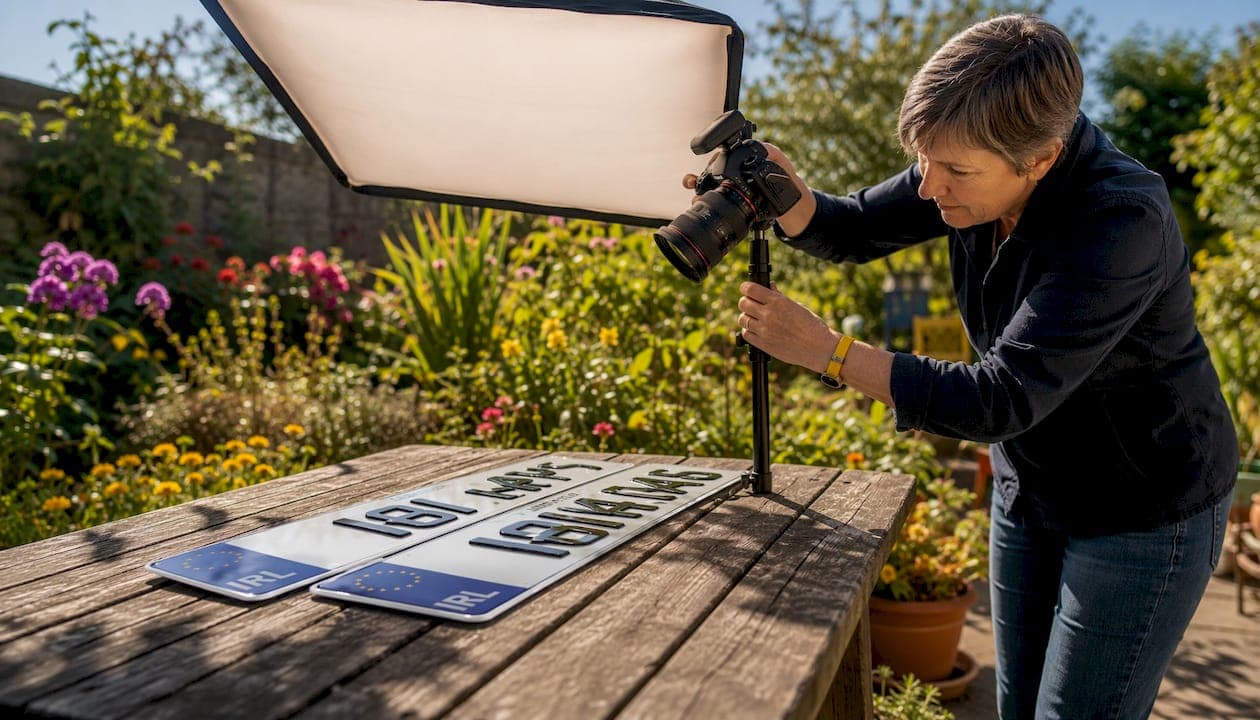
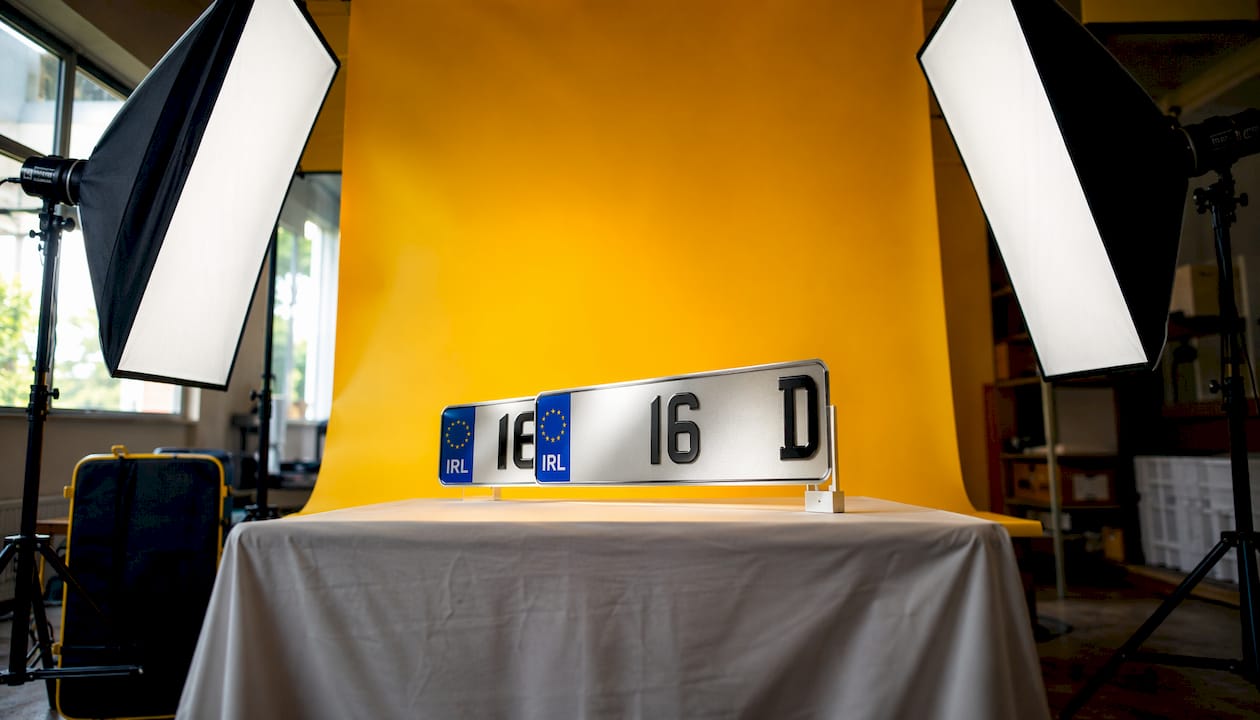
- Lighting setup: Use diffused, soft-box lighting positioned at 45-degree angles to the plate surface to eliminate hotspots on glossy aluminum.
- Background selection: A neutral gray or black background makes plate colors pop without competing for attention. Avoid busy or patterned backdrops.
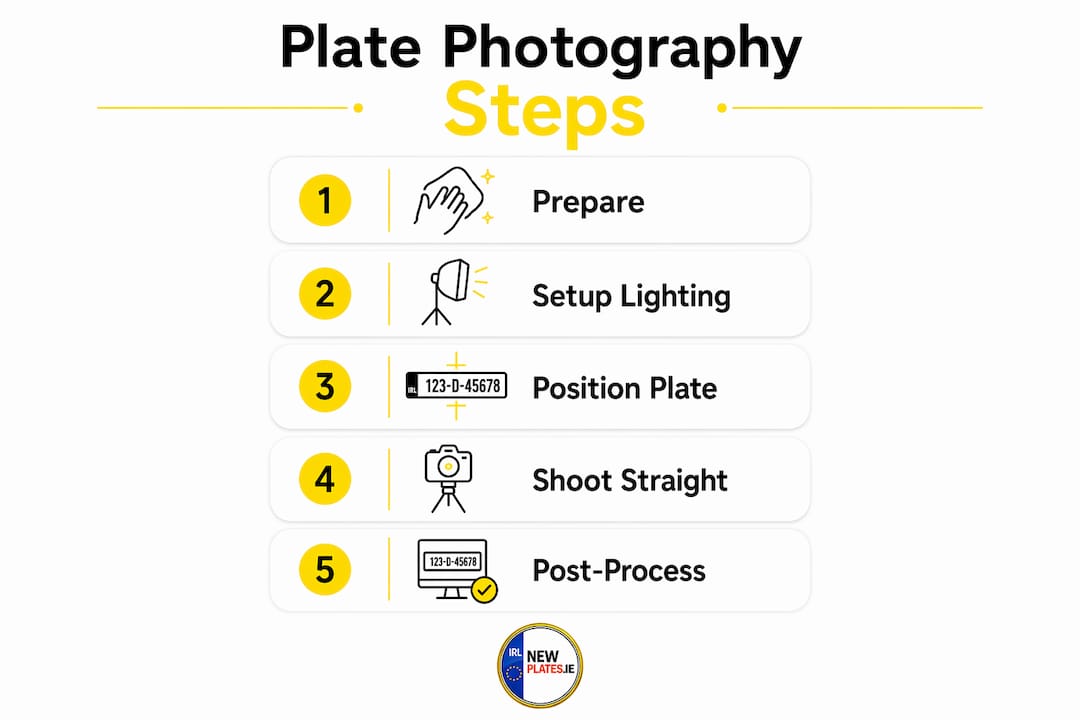
- Camera settings: Shoot in RAW format, set aperture to f/8 for maximum sharpness across the plate surface, and use a tripod to eliminate camera shake.
- Color accuracy: Use a color calibration card in your first test shot to match the plate's printed colors in post-processing.
- Framing: Fill the frame with the plate, leaving a small, consistent border on all sides for a clean, gallery-style composition.
Pro Tip: In post-processing, use Adobe Lightroom's lens correction tool to remove any barrel distortion from wide-angle lenses. A perfectly rectangular plate that looks slightly curved in the photo will undermine an otherwise excellent shot.
Effective ways to mount and display your show plates
Mounting is where a lot of enthusiasts cut corners, and it shows. A plate propped against a wall or lying flat on a table does not do justice to the work that went into it. The right mounting method turns a custom plate into a proper exhibit piece.
- Aluminum standoff mounts: These hold the plate slightly proud of the wall surface, creating a shadow gap that gives a premium, gallery-quality look.
- Picture ledges: Ideal for displaying multiple plates in a row; easy to rearrange without new fixings.
- Wall hangers and keyhole brackets: Low-profile and secure; best for permanent or semi-permanent show installations.
- Acrylic display stands: Perfect for tabletop display; keeps plates upright and angled toward the viewer.
- Placement strategy: Position plates at eye level (roughly 150cm–160cm from the floor to the plate center) for maximum visual impact and easy reading.
- Protective measures: Apply felt pads to any contact points to prevent scratching the plate surface during setup and takedown.
For anyone concerned about plate security beyond the show floor, plate cloning protection is worth considering, especially for road-legal plates that carry your real registration.
Why Newplates is a trusted source for custom photographic show plates in Ireland
Newplates specializes in legally compliant, custom Irish number plates, covering everything from 4D gel plates with raised acrylic lettering to 3D Gel plates and standard NCT-compliant options. The range suits everyday drivers and serious show enthusiasts alike.
- Product variety: Road Legal 4D, Road Legal 3D Gel, Standard NCT compliant plates, and dedicated show plates.
- Pricing: All standard plates start from €15.99, making quality accessible without a large upfront commitment.
- Personalization: Plates can feature custom images, text, and branding tailored to your vehicle or event.
- Legal compliance: Every road-legal plate is produced to meet current Irish Road Traffic and NCT standards.
- Positive reputation: Newplates carries strong customer reviews across its product range, reflecting consistent quality and service.
Explore the full range of custom show plates to find the right fit for your next event.
Legal compliance requirements for custom show plates in Ireland
Irish law is clear: any plate fitted to a vehicle on a public road must comply with the Road Traffic (Vehicles) Act and associated regulations. Show plates used purely off-vehicle are exempt from road-use rules, but the moment you drive to the show with a non-compliant plate fitted, you are asking for a conversation with the Gardaí that nobody wants.
Compliance covers font type (Charles Wright is the mandated typeface), character spacing, digit height, and reflective background material. Exhibition vehicle plates have their own specific rules under Irish regulations, so check the exhibition vehicle plate guide before ordering.
Lighting techniques that make your custom plate photography stand out
Glossy aluminum plates are beautiful in person and notoriously tricky to photograph. The reflective surface picks up every stray light source in the room. The solution is controlled, diffused lighting rather than direct flash or bare bulbs.
A two-light setup works well: one soft box on each side of the plate at roughly 45 degrees, both set to equal power. This wraps light evenly across the surface and kills the harsh reflections that obscure fine detail. For outdoor photography at shows, shoot in open shade or use a large diffusion panel to soften direct sunlight. Polarizing filters on your lens can also cut residual glare on glossy finishes without affecting the plate's printed colors.
Common challenges when photographing custom plates and how to fix them
Glare and hotspots are the most frequent complaint. The fix is diffused lighting, as described above, combined with a slight downward tilt of the plate (5–10 degrees) to redirect reflections away from the lens.
Color shift happens when the camera's white balance does not match the ambient light. Set a custom white balance using a gray card before shooting, and always shoot RAW so you can correct it in post without quality loss.
Distortion from shooting at an angle makes rectangular plates look trapezoidal. Shoot straight-on with the camera sensor parallel to the plate surface, and use Lightroom's transform tools to correct any remaining keystoning.
Shallow depth of field can leave the plate edges soft when shooting close up. Stop down to f/8 or f/11 and use a tripod to compensate for the slower shutter speed.
How to showcase your photographed custom plates at shows and online
At a physical show, context matters as much as the plate itself. Pair the plate with a photo of the vehicle it belongs to, a small card describing the plate type and production method, and consistent lighting that matches the rest of your display. Plates displayed at eye level with clean, uncluttered surroundings consistently draw more attention than those buried in a crowded table layout.
Online, high-resolution images shot against a neutral background perform best on social media and marketplace listings. For custom branded plate designs, a lifestyle shot showing the plate fitted to the vehicle alongside a clean studio shot gives viewers the full picture. Tag the plate type, material, and any personalization details in the caption. Enthusiast communities on Instagram and dedicated Irish car forums respond well to behind-the-scenes production shots too, so do not overlook the process as part of the story.
Newplates makes it straightforward to get your show plate right
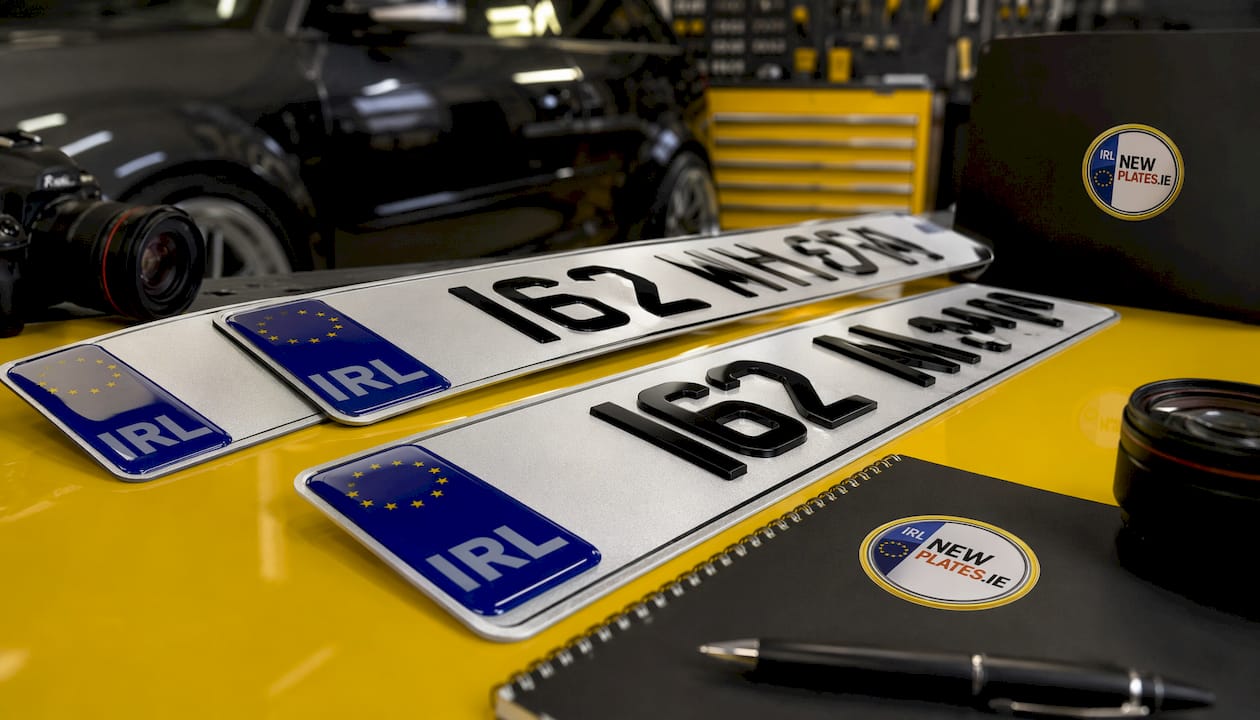
Getting a custom show plate that looks great in photos and holds up to scrutiny at an Irish vehicle event is not complicated when you start with the right supplier. Newplates produces road-legal and show-specific plates across the full range: 4D Legal, 3D Gel, and Standard NCT compliant options, with all standard plates starting from €15.99. Every plate is built to Irish legal standards, so you are not gambling on compliance when you pull into the show ground.
Visit newplates.ie to configure your custom plate, choose your finish, and place your order. The process is straightforward, the pricing is transparent, and the result is a plate worth photographing.
Key Takeaways
Custom show plates for Irish vehicle events must balance legal compliance, material quality, and photographic presentation to make a real impact.
| Point | Details |
|---|---|
| Legal compliance first | Road-legal plates must meet Irish Road Traffic regulations on font, size, reflective background, and NCT standards. |
| Aluminum with sublimation | Dye-sublimation on aluminum delivers the sharpest, most durable photographic prints for show plates. |
| Minimum 800x800 dpi | Supply artwork at 800x800 dpi or higher to avoid pixelation on the finished plate. |
| Diffused lighting wins | Two soft boxes at 45-degree angles eliminate glare and hotspots on reflective aluminum surfaces. |
| Newplates for Irish shows | Newplates offers road-legal 4D, 3D Gel, and NCT compliant show plates, with all standard plates starting from €15.99, built to current Irish standards. |