
Custom branded plate design ideas are creative, strategically crafted visuals that combine clear typography, vibrant color, and durable materials to make a vehicle or promotional item instantly recognizable. Whether you are personalizing your own car or building a fleet identity for your business, the design choices you make determine whether your plate gets noticed or ignored. The Irish market in 2026 offers more options than ever, from standard NCT-compliant plates to premium 3D and 4D gel formats available through Newplates. Getting the balance right between bold creativity and practical readability is the single most important factor in any successful plate design.
1. What are the top custom branded plate design ideas?
The strongest custom branded plate design ideas share one trait: they are readable at a distance before they are beautiful up close. Readability must always trump artistic complexity for any plate used on a vehicle. A design that looks like a solid block of color from 10 feet away belongs on a gallery wall, not a bumper.
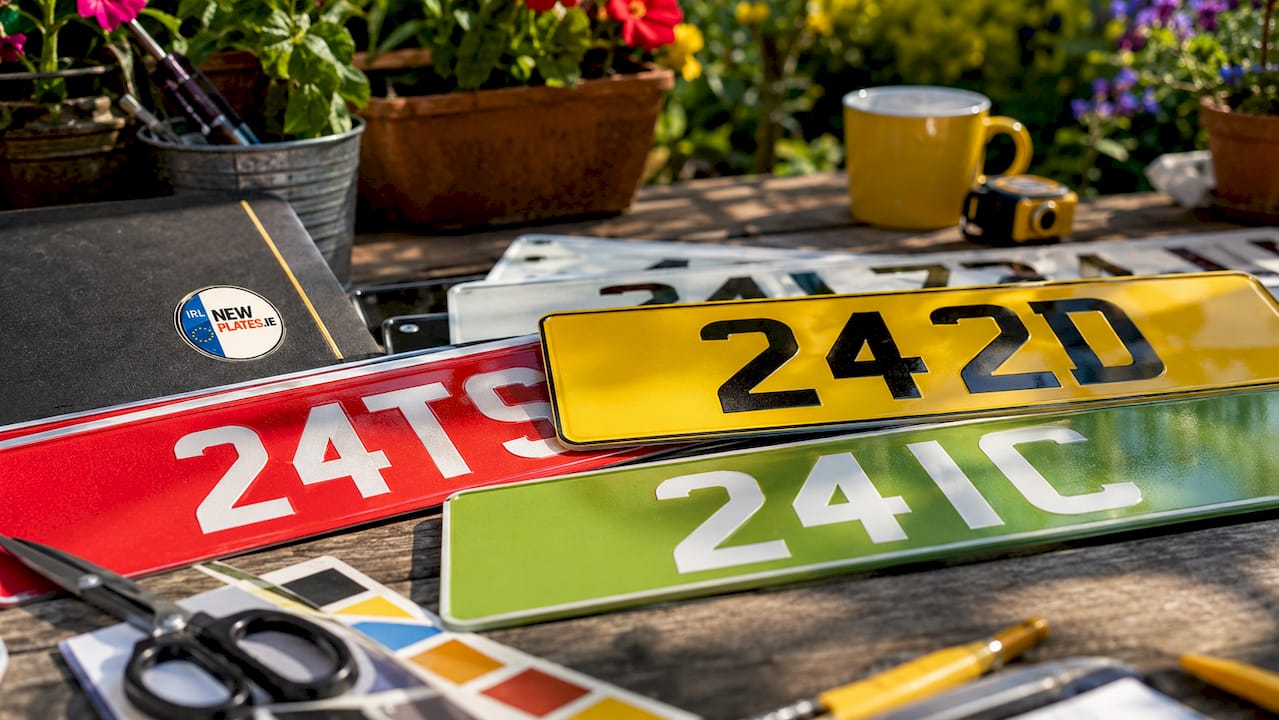
High-contrast color schemes
High contrast is the single most effective tool for visibility. Block lettering on red or yellow backgrounds delivers optimal character recognition at distances beyond 10 feet. Decorative or script fonts fail under real traffic conditions because the eye cannot separate individual characters quickly enough.
Oversized logo placement
Placing a brand logo in the upper left or center of a show plate draws the eye immediately. Keep the logo at no more than 30% of the total plate area so it does not compete with the text. A logo that crowds the registration characters defeats the purpose of having both.
Minimalist layouts with bold typography
Modern branding favors clean, bold color blocking and typography over busy, cluttered designs. A single strong typeface, one or two brand colors, and plenty of negative space creates a plate that reads instantly. Minimalism is not laziness. It is the fastest path to recognition.
Unique finishes and textures
Glossy resin, laser-etched metal, and 4D gel lettering each create a tactile and visual premium effect. Aligning material finish with brand identity transforms a plate from a generic item into a branded object with perceived value. Newplates offers 4D gel number plates that deliver exactly this kind of elevated finish.
Pro Tip: Test your design by shrinking it to thumbnail size on your screen. If the text and logo are still clear at that scale, they will read well from a moving vehicle.
2. How to incorporate personalized and promotional elements effectively
Personalized plate designs work best when the branding element serves a clear purpose. A personal vehicle plate might carry initials or a meaningful number sequence. A promotional plate for a business vehicle needs a logo, a short brand name, or a web address that sticks in memory after a single glance.
- Personalized text and numbers: Use short phrases, initials, or number combinations that carry meaning without requiring explanation. Avoid long sentences. Plates are not billboards.
- Logo placement strategy: Center-top placement works for show plates. For road-legal plates, logos typically appear in the border area or as a small badge element to stay within compliance guidelines.
- Avoiding branding clichés: Generic flames, rustic textures, and stock clip art signal low effort. Fresh brand identity comes from original color combinations and clean graphic elements, not borrowed visual shorthand.
- Sizing and placement compliance: Irish road-legal plates must meet specific character height and spacing requirements set by Irish regulations. Promotional or show plates used off-road have more creative freedom, but sizing still affects readability.
- Business promotional plates: Fleet vehicles, event cars, and branded company cars all benefit from consistent plate design. A uniform look across a fleet reinforces brand recognition every time those vehicles appear in public.
You can read more about the specifics of designing a company branded plate in Ireland, including compliance considerations that affect layout choices.
3. What materials and printing techniques support durable, vibrant designs?
Material choice determines how long your design looks good, not just how good it looks on day one. The three most common materials for custom plates are aluminum, resin, and acrylic, each with different strengths.
Aluminum
Weather-resistant 0.040 aluminum is the industry standard for outdoor plates. It holds its shape through seasonal temperature changes and resists warping, cracking, and fading. For any plate that will live outdoors year-round, aluminum is the right call.
Resin and gel finishes
Resin and gel overlays add a raised, three-dimensional effect to lettering and graphics. This finish catches light differently than a flat print, which makes the plate more visually striking in both daylight and artificial light. Newplates' 3D gel Irish number plates use this technique to create plates that look premium without sacrificing durability.
Printing quality and color accuracy
Full-color digital printing with Pantone Matching System ensures color consistency across every plate in a batch. This matters for fleet orders where brand color fidelity is non-negotiable. Low-resolution artwork leads to blurry, pixelated results on metal surfaces. Always supply artwork at 300 DPI or higher.
Pro Tip: Ask your plate supplier to confirm they use Pantone-matched inks before placing a bulk order. Color drift across a fleet of 20 vehicles looks unprofessional and is expensive to fix.
Production times for custom plates typically run 1 to 6 business days depending on the complexity of the order. Standard plates with no custom artwork turn around faster. Plates with full-color printing or 3D gel lettering take longer to produce correctly.
4. How to choose the best personalized plate design for your needs
The right design depends on three factors: purpose, budget, and where the plate will be used. A show plate for a car meet has different requirements than a road-legal plate for a company van.
| Use Case | Best Material | Finish | Customization Level | Price Range |
|---|---|---|---|---|
| Personal road-legal plate | Aluminum | Standard reflective | Moderate | From €15.99 |
| Business fleet plate | Aluminum | Reflective or matte | High | Varies by volume |
| Show or display plate | Acrylic or resin | Glossy or gel | Maximum | Varies |
| Promotional event plate | Acrylic | Full-color print | Maximum | Varies |
| Collectible or gift plate | Aluminum or resin | Laser-etched or gel | High | Varies |
A few practical points to guide your decision:
- Purpose first: Road-legal plates in Ireland must meet specific regulatory standards. Show plates and promotional plates have more design freedom but cannot be used on public roads.
- Budget and volume: Custom novelty plates typically cost between €16 and €30 for standard orders. Bulk orders for fleet branding often come with volume pricing.
- Durability needs: If the plate will be exposed to weather, aluminum with a UV-resistant print is the minimum requirement. Gel finishes add an extra protective layer.
- Uniqueness vs. compliance: The more creative freedom you want, the more likely you are looking at a show plate rather than a road-legal one. Newplates offers both, so you are not forced to choose between style and compliance.
For personal vehicle owners who want something that turns heads at car meets, custom show plates give you full creative control. For everyday driving, road-legal number plates from Newplates keep you compliant without sacrificing quality.
5. Reflective vs. non-reflective finishes: which one is right?
Reflective finishes are required for road-legal plates in Ireland. They improve visibility at night and in low-light conditions, which is why Irish regulations mandate them for vehicles used on public roads. Non-reflective finishes are fine for show plates, display pieces, and promotional items that never see a public road.
The practical difference matters more than most people realize. A reflective plate bounces light from headlights and street lamps back toward the source, making the registration clearly visible to other drivers and cameras. A non-reflective plate looks great in a showroom but becomes hard to read after dark. If your plate is going on a vehicle that drives at night, reflective is not optional.
Newplates produces both formats. Their illuminated Japanese number plates take visibility a step further with built-in illumination effects for display use.
6. Typography choices that make or break a plate design
Typography is the single most underestimated element in plate design. Most people focus on color and logo placement, then pick a font as an afterthought. That is backwards. The font determines whether your plate communicates in half a second or not at all.
Block lettering is the industry standard for a reason. Each character has a distinct shape with no ambiguity between similar letters like I, l, and 1. Decorative fonts introduce exactly that ambiguity, which is fine for a wedding invitation and a problem for a vehicle plate. For road-legal plates, the character style is specified by Irish regulations and is not a design choice. For show plates and promotional plates, you have freedom, but block lettering still performs best for readability.
Font size also matters. Characters that are too small to read from a car length away are wasted space. If you are adding a web address or phone number to a promotional plate, keep it large enough to read at a glance, not a stare.
Key takeaways
The most effective custom branded plate designs combine high-contrast color, block typography, and durable materials to deliver instant recognition on vehicles and promotional items.
| Point | Details |
|---|---|
| Readability comes first | If a design is unclear from 10 feet away, it fails its primary job on a vehicle. |
| Material determines longevity | Aluminum with UV-resistant print or gel finish handles Irish weather without degrading. |
| Pantone matching matters | Color-matched inks keep brand colors consistent across fleet orders and reprints. |
| Show plates vs. road-legal plates | Show plates allow maximum creativity; road-legal plates must meet Irish regulatory standards. |
| Typography is not an afterthought | Block lettering outperforms decorative fonts for readability at distance every time. |
Why minimalism wins in plate design: a perspective
The trend I keep seeing play out is this: the most memorable plates are almost always the simplest ones. Customers come in with elaborate concepts, full-color gradients, multiple fonts, and a logo that takes up half the plate. Then they see a clean, two-color plate with bold block lettering next to it, and they immediately understand why less works better.
The reason is not aesthetic preference. It is physics. A moving vehicle gives a viewer roughly one to two seconds to register what they are seeing. In that window, a complex design registers as noise. A simple, high-contrast design registers as a brand. I have seen this pattern repeat across personal plates, fleet vehicles, and event promotional plates. The customers who trusted the minimalist approach consistently got more comments and recognition than those who went for maximum complexity.
There is also a practical angle that gets overlooked. A simpler design is easier to reproduce consistently. When you order a second plate, or a tenth plate for a fleet, a clean design with Pantone-matched colors looks identical every time. A complex gradient with custom textures introduces variation between batches. That variation undermines the whole point of branded consistency.
My honest advice: start with your brand's primary color, your logo, and one typeface. Add elements only if they solve a specific problem. Most of the time, you will find you do not need to add anything.
— Patrick
Newplates has a plate design for every purpose
Whether you are after a road-legal plate that meets every Irish NCT standard or a full-color show plate that turns heads at a car meet, Newplates has the format and finish to match your vision.
Newplates produces 3D gel Irish number plates and 4D legal plates with fast turnaround times and quality finishes that hold up to Irish weather. Prices start from €15.99 for standard plates, and the ordering process is straightforward with expert support available if you need help matching your design to the right format. For businesses looking at fleet branding or promotional plates, Newplates handles both road-legal and custom show plate orders with the same attention to finish and accuracy.
FAQ
What are the best colors for a custom branded plate?
High-contrast combinations like black text on a white or yellow background deliver the best readability at distance. Red and yellow backgrounds with dark lettering are proven to maximize character recognition beyond 10 feet.
Can I use a logo on a road-legal plate in Ireland?
Road-legal plates in Ireland must comply with Irish regulatory standards, which restrict the placement and size of non-registration elements. Logos are generally permitted only in designated border areas and must not interfere with the registration characters.
How long does it take to get a custom plate made?
Standard custom plates typically take 1 to 6 business days to produce, depending on the complexity of the design and the finish selected. Gel and 3D formats take longer than flat-print standard plates.
What is the difference between a show plate and a road-legal plate?
A show plate is for display only and cannot be used on a vehicle driven on public roads in Ireland. A road-legal plate meets Irish regulatory standards for character size, reflective background, and layout, making it legal for everyday driving.
Do I need high-resolution artwork for a custom plate order?
Yes. Low-resolution images produce blurry, pixelated results on metal surfaces. Supply artwork at 300 DPI or higher, and confirm your supplier uses Pantone-matched inks for accurate color reproduction.