
Exhibition vehicle plates are official license plates designated for vehicles used primarily in exhibitions, parades, and club events rather than regular road use. If you own a classic car, a vintage motorcycle, or a show vehicle in Ireland, understanding what are exhibition vehicle plates is the first step to staying legal and getting the most out of your display. These plates come with specific eligibility rules, usage restrictions, and registration requirements that differ significantly from standard Irish number plates. Get them right, and you can show off your pride and joy without worrying about the gardaí.
What are exhibition vehicle plates and who qualifies in Ireland?
Exhibition vehicle plates are specialized registration credentials issued for vehicles maintained for exhibitions, club activities, and parades rather than daily transport. The key word here is "maintained." Your vehicle needs to be preserved and presented, not driven to the shops every Tuesday.
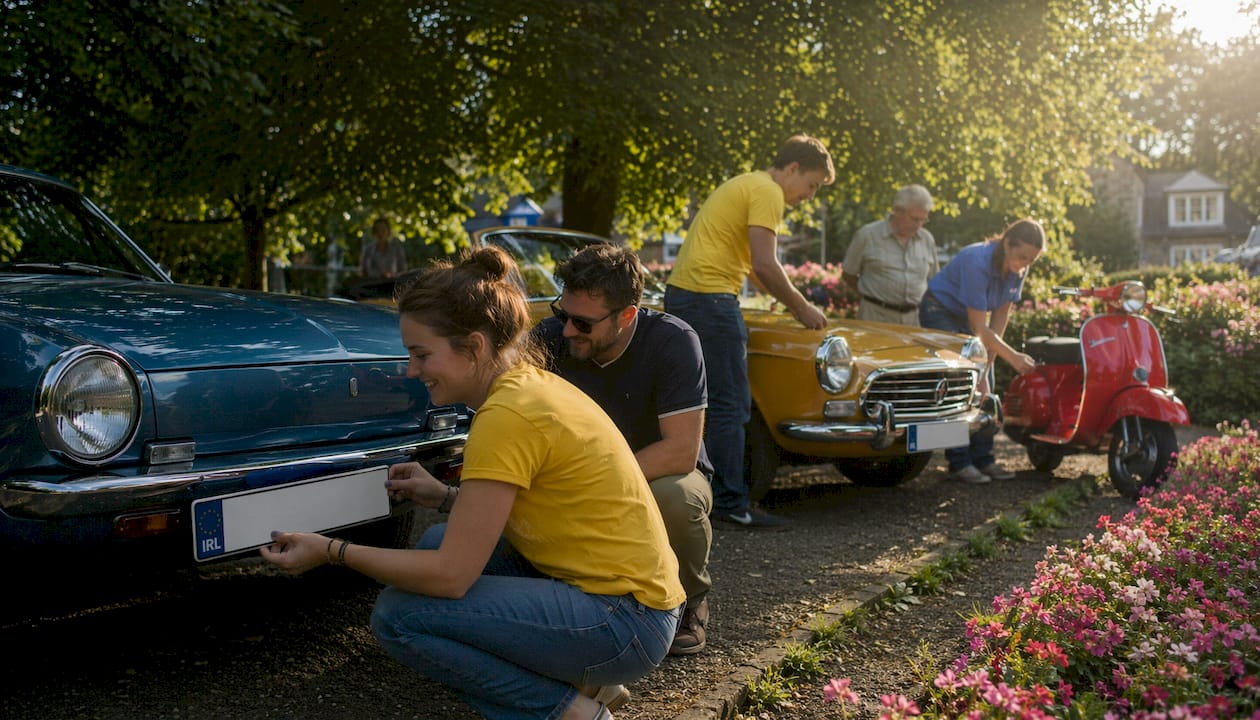
In Ireland, vehicles eligible for exhibition plates must generally meet strict age and condition criteria. Antique vehicles must be over 30 years old and subjected to inspection and photographic documentation by authorities for first-time registration. That means you cannot simply slap an exhibition plate on a 2010 hatchback and call it a show car.
Eligibility typically requires:
- Vehicle age: The vehicle must qualify as a historic or antique vehicle under Irish regulations.
- Condition: The vehicle must be preserved in original or authentically restored condition.
- Intended use: The vehicle must be used exclusively for exhibitions, shows, parades, and limited maintenance testing.
- Documentation: Photographic evidence and inspection records are required at first registration.
Usage restrictions are firm. Exhibition plates legally restrict vehicles to limited use only for shows and testing, prohibiting regular driving. Misuse can result in penalties or loss of registration. That is not a risk worth taking when your vehicle is a lovingly restored 1970s classic.
Pro Tip: Keep a dedicated folder with your inspection records, photographs, and registration documents. Authorities can request these at any time, and having them organized saves you a lot of stress on show day.
How do exhibition plates differ from standard and temporary plates?
Exhibition plates and standard Irish road plates serve completely different legal purposes. Standard plates allow unrestricted road use across Ireland. Exhibition plates permit only limited, event-specific use. Driving your exhibition-registered vehicle to work is not just frowned upon. It is a registration offense.
Temporary vehicle plates and special event license plates add another layer of distinction. Temporary plates are typically issued for short periods to allow a vehicle to travel to a specific destination, such as a new owner driving a recently purchased car home. They do not grant the same display credentials as exhibition plates, and they are not intended for repeated event use.
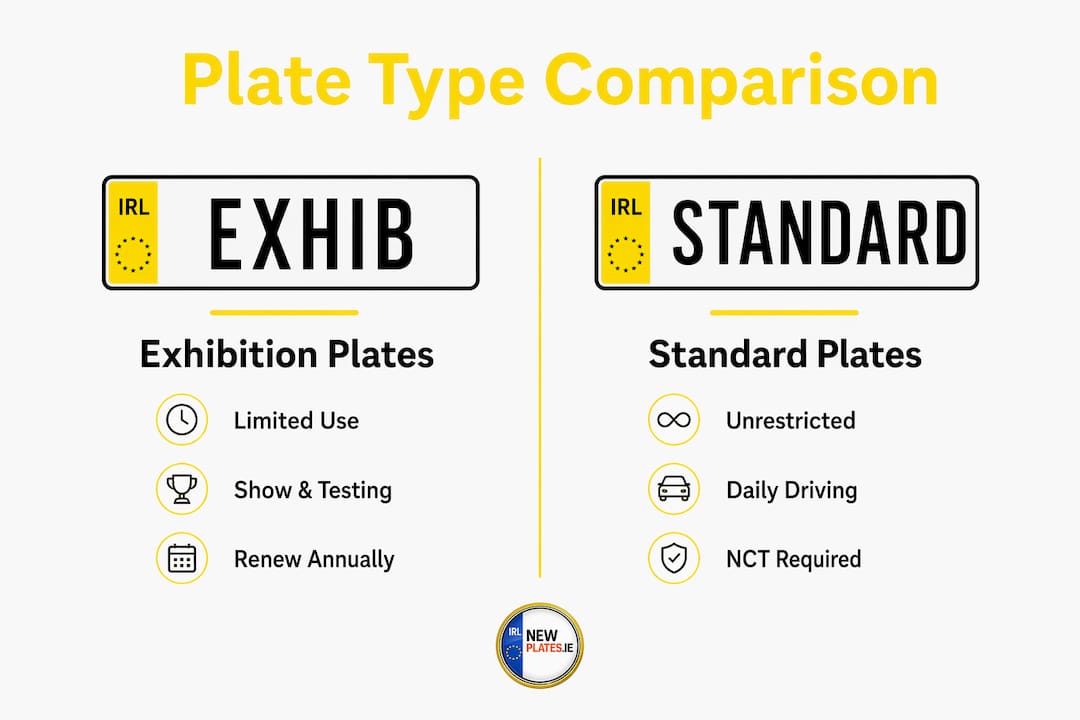
Here is how the main plate types compare:
| Plate type | Road use allowed | Primary purpose | Renewal process |
|---|---|---|---|
| Standard Irish plates | Unrestricted | Daily transport | Annual motor tax |
| Exhibition plates | Limited (shows, testing) | Display and events | Periodic review |
| Temporary plates | Single journey only | Short-term transit | Single issuance |
| Year of Manufacture plates | Display only | Vintage aesthetics | Requires modern plates for road use |
Year of Manufacture (YOM) plates deserve a special mention. YOM plates are original vintage plates used for display only, requiring modern legal plates to remain with the vehicle. This contrasts directly with state-issued exhibition plates, which carry their own legal registration status. If you want the vintage look without the legal complications, a quality show plate from Newplates can give you that aesthetic without misrepresenting your vehicle's registration status.
The visual differences matter too. Standard Irish plates follow strict National Car Test (NCT) compliance rules covering reflective background, digit height, and font. Exhibition plates may carry additional markings to indicate their restricted status. Mixing up plate types on a vehicle is asking to be pulled over.
How does vehicle exhibition registration actually work?
Registering a vehicle for an exhibition involves two separate processes that people constantly confuse. The first is the legal registration of the vehicle itself with the relevant Irish authority. The second is the event-specific registration to participate in a particular show or automotive event.
Event registration for exhibits differs fundamentally from legal vehicle registration. Venues emphasize image quality and vehicle story during application to ensure balanced, compelling displays rather than mere eligibility. In other words, being legally registered is the floor, not the ceiling.
For event participation, the typical process runs like this:
- Gather your vehicle details: Make, model, year, registration number, and restoration history.
- Prepare quality photographs: Clear, well-lit images from multiple angles significantly improve your acceptance chances.
- Write your vehicle's story: A compelling narrative about the car's history, restoration, or significance makes your application stand out.
- Submit the online application: Vehicle registration for public automotive events involves submitting owner and vehicle details online, with show credentials issued weeks before the event.
- Confirm your category: Entering the wrong class is one of the most common mistakes and can result in rejection or poor placement.
Rushing through exhibitor vehicle registration forms leads to delays or rejection. Completing forms with accurate details, quality photos, and correct categories is crucial for approval and good placement. Event organizers view the registration itself as part of the display experience. A sloppy application signals a sloppy exhibitor.
Vehicle registration for high-quality shows is competitive. Including a unique story and well-presented details improves acceptance chances and preferred display spots at curated automotive events. Think of it like a job application. The vehicle is your resume, and the story is your cover letter.
Pro Tip: Apply for shows at least two to three months in advance. Popular events fill their exhibitor slots quickly, and late applications almost always end up on a waiting list regardless of how impressive the vehicle is.
Promotional and display signage options beyond legal plates
Legal plates handle compliance. Promotional signage handles impact. For businesses and brands exhibiting vehicles at trade shows or automotive events, the visual presentation extends well beyond the number plate on the bumper.
LED video wall exhibits generate significantly higher views and brand recall compared to static displays. LED displays can generate 400% more views and 83% brand recall compared to static alternatives. That is a significant gap between a printed banner and a dynamic screen backdrop.
Effective promotional display options for exhibition vehicles include:
- Custom vehicle wraps: Full or partial wraps that carry brand colors, logos, and messaging directly on the vehicle body.
- LED backdrop displays: Dynamic screens positioned behind or around the vehicle to create an immersive visual environment.
- Branded vehicle framing: Custom plate surrounds and display frames that draw attention to the vehicle's registration and branding simultaneously.
- Vendor display stands: Freestanding signage positioned around the vehicle to communicate product or brand information to passing visitors.
Exhibiting vehicles effectively requires not only compliance but also creative presentation with LED backdrops and lighting to stand out in large event venues. A beautifully restored classic sitting under flat fluorescent lighting will always lose to a well-lit vehicle surrounded by thoughtful display elements. The plate is the legal credential. The display is the experience.
For businesses using vehicles as brand assets at trade shows, vehicle exhibition signs and display materials should align with the brand's visual identity. Consistency between the vehicle's appearance and the surrounding display materials creates a professional impression that static, generic setups simply cannot match.
Key Takeaways
Exhibition vehicle plates are legally restricted credentials for show and event use only, and confusing them with standard or temporary plates creates real legal risk.
| Point | Details |
|---|---|
| Legal use is limited | Exhibition plates permit only show, parade, and testing use. Daily driving risks registration loss. |
| Age and condition matter | Vehicles must typically be over 30 years old and pass inspection for first-time exhibition registration. |
| Event registration is separate | Applying to exhibit at a show requires its own application, photos, and vehicle story beyond legal plate status. |
| YOM plates are display only | Year of Manufacture plates require modern legal plates for any road use and differ from exhibition plates. |
| Display quality affects acceptance | Strong photos and a compelling vehicle narrative improve show acceptance and placement at competitive events. |
Why getting this right matters more than most people realize
Patrick here. After years of watching car enthusiasts show up to events with the wrong paperwork, the wrong plates, or both, the pattern is always the same. People assume that owning a beautiful vehicle is enough. It is not.
The biggest mistake I see is treating exhibition plate registration as a one-time checkbox rather than an ongoing responsibility. Regulations evolve. The Irish motor tax and registration framework has tightened its documentation requirements, and what was acceptable five years ago may not pass inspection today. Staying current with the rules is not optional if you want to keep your registration status intact.
The second mistake is separating legal compliance from presentation quality. Organizers at well-run automotive events are curating an experience for visitors. They want vehicles with stories, vehicles that are presented with care, and exhibitors who understand that their car is part of a larger show. A legal show plate that meets NCT compliance standards and looks sharp on the vehicle sends a signal that you take the whole thing seriously.
My honest advice: treat your exhibition vehicle registration the same way you treat the restoration itself. Do it properly, document everything, and never cut corners. The gardaí at a road checkpoint and the show organizer reviewing your application are both looking for the same thing: evidence that you know what you are doing.
— Patrick
Newplates and legal plates for your exhibition vehicle
If you are preparing a vehicle for exhibition use in Ireland, the number plate is one detail you cannot afford to get wrong.
Newplates offers a full range of compliant and customizable Irish number plates, from road legal 4D plates that meet NCT standards to standard NCT compliant plates for everyday registration needs. For show vehicles where visual impact matters as much as compliance, the 3D gel plate range delivers a sharp, professional finish that looks the part at any automotive event. Prices start from €15.99, and every plate is produced to Irish legal specifications. Whether your vehicle is heading to a concours event or a local club show, Newplates has a plate that fits the occasion.
FAQ
What are exhibition vehicle plates used for?
Exhibition vehicle plates are specialized registration credentials for vehicles used in shows, parades, and club events rather than daily driving. They legally restrict the vehicle to limited, event-specific use only.
Can I drive my exhibition-registered vehicle on public roads in Ireland?
Exhibition plates permit only limited road use for shows and maintenance testing. Regular driving on public roads with an exhibition-registered vehicle can result in penalties or loss of registration.
How old does a vehicle need to be for exhibition registration in Ireland?
Vehicles must generally be over 30 years old to qualify for exhibition registration, and first-time registration requires inspection and photographic documentation by the relevant authority.
What is the difference between exhibition plates and Year of Manufacture plates?
YOM plates are original vintage plates used for display only and require modern legal plates for any road use. Exhibition plates carry their own legal registration status and are issued by the relevant authority rather than sourced from the vehicle's original era.
Do I need to register separately to exhibit my vehicle at a show?
Yes. Legal vehicle registration and event registration are two separate processes. Show organizers require their own application, including quality photographs and a vehicle story, to assess acceptance and placement at the event.