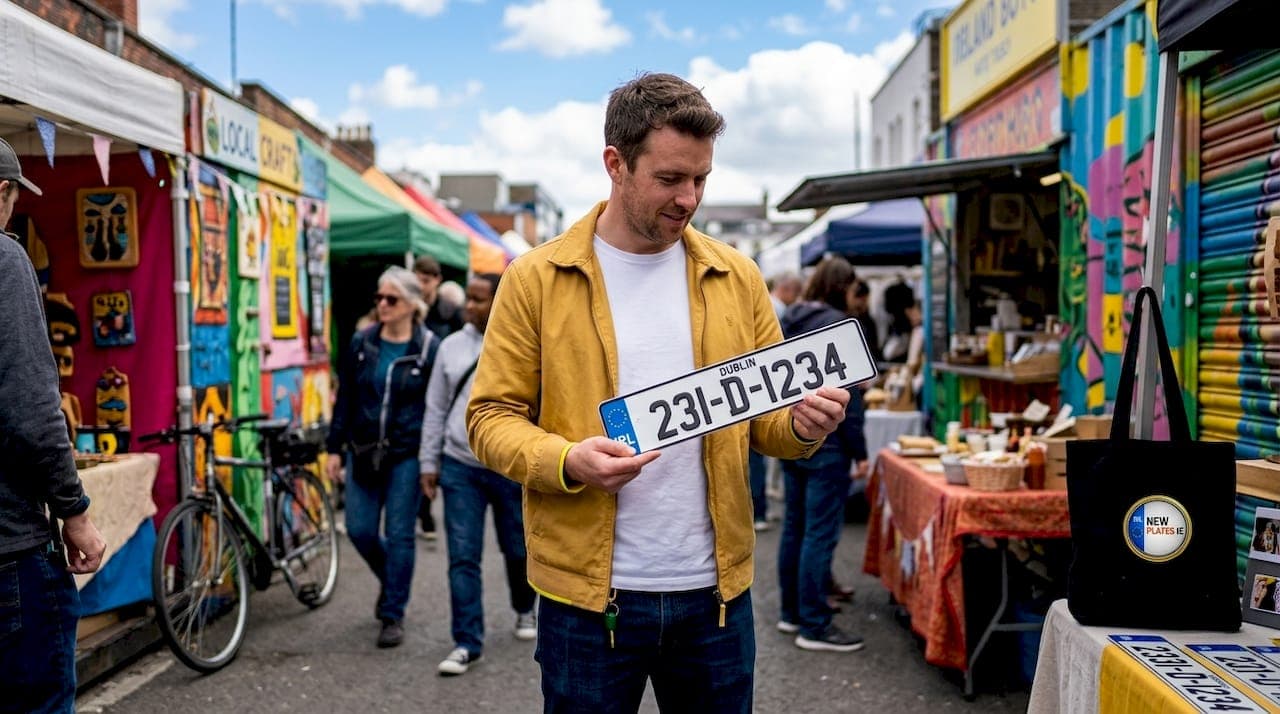
The county identifier on Irish number plates is a mandatory, fixed code that permanently links a vehicle to the location of its first registration. Known formally as the Irish registration plate county code, this element is not decorative. It is a legal requirement, assigned by the Revenue Commissioners at the point of initial registration, and it stays with the vehicle for life. Understanding how county identifiers work matters for every vehicle owner in Ireland, whether you are buying a used car, replacing a damaged plate, or preparing for an NCT inspection.
What is the role of county identifier on Irish plates?
The county identifier serves one primary function: permanent administrative traceability. The Revenue Commissioners assign the code at first registration based on the initial owner's postal address. That code then stays attached to the vehicle in the national database, regardless of how many times the car changes hands or moves across the country.
The current plate format, introduced in 1987, follows a year-county-sequence pattern. A plate reading "231-D-12345" tells you the vehicle was first registered in the first half of 2023, in Dublin. The standard format uses single-letter codes for major cities and two-letter codes for counties, a design choice made specifically to avoid duplication across the national system.

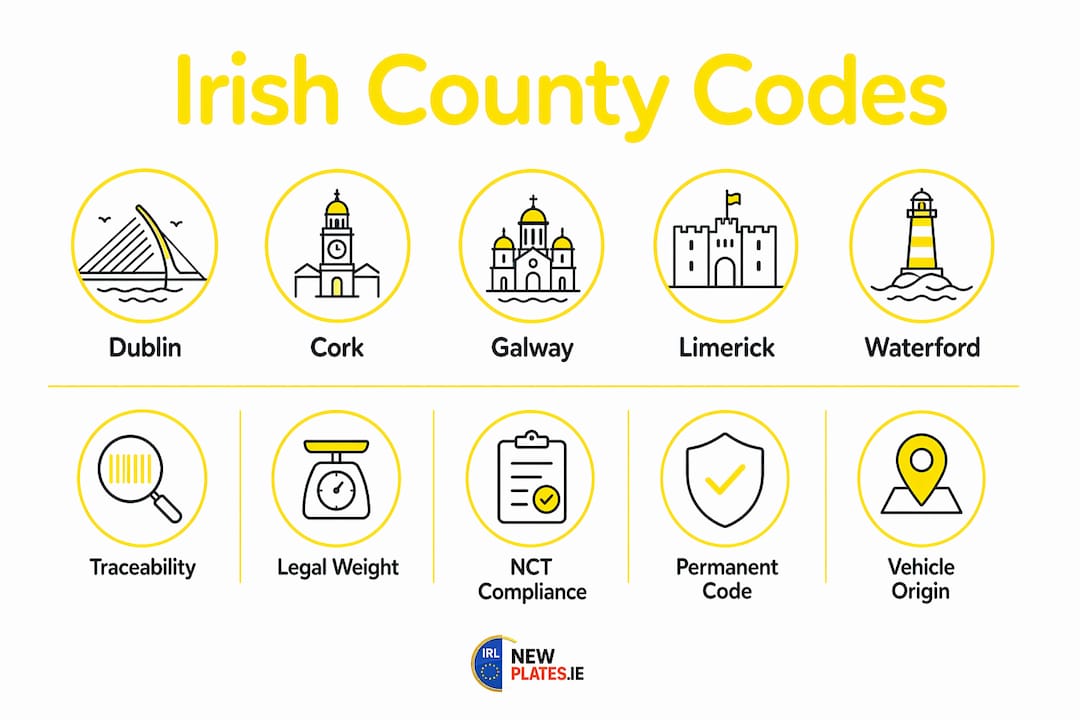
As of 2026, 26 distinct county codes exist, plus separate city codes. Here is a quick reference for some of the most recognized codes:
| County or City | Code |
|---|---|
| Dublin | D |
| Cork | C |
| Galway | G |
| Limerick | L |
| Waterford | W |
| Kerry | KY |
| Tipperary | T |
| Wicklow | WW |
The county name must appear in Irish at the top of the plate. For example, a Dublin plate displays "Baile Átha Cliath" above the registration number. This is not optional. Legal plate requirements also specify a black font on a white reflective background, an EU flag on the left, and strict standards for font size and digit height.
Pro Tip: If you are ordering a replacement plate, confirm the exact Irish-language county name required for your registration. Getting this wrong is one of the most common compliance errors vehicle owners make.
Why does the county code matter beyond just looks?
The county identifier's main function is administrative, not visual. The national vehicle database managed by the Revenue Commissioners uses the county code as a permanent link to a vehicle's registration origin. This matters during Garda checks, insurance verification, and any official inquiry into a vehicle's history.
"The county identifier's primary purpose is administrative traceability, linking the vehicle to its initial registration location in the national database rather than indicating where the current owner lives. This distinction is critical for law enforcement and registration compliance." — Dublin Observer
This traceability function means the county code carries real legal weight. When Gardaí run a plate, the county code confirms the vehicle's registration origin instantly. A mismatch between the displayed code and the database record raises an immediate red flag. That is why tampering with a county identifier is treated as a serious offense, not a minor cosmetic issue.
The county code also supports vehicle origin identification during NCT compliance checks. Inspectors verify that the plate format, including the county identifier display, matches legal standards. A plate with an incorrect or illegible county code can result in a failed inspection.
Common misconceptions about Irish county identifiers
Several persistent myths surround Irish car plate identifiers, and they cause real problems for vehicle owners.
The biggest misconception is that the county code reflects where the current owner lives. It does not. County codes remain fixed to the vehicle for its entire lifetime, regardless of ownership or location changes. A car first registered in Cork carries the "C" code even if it is sold three times and ends up permanently parked in Donegal. The plate tells you where the car started its life, not where it lives now.
Other common misunderstandings include:
- You can choose your county code. You cannot. Personalized or vanity plates are not permitted in Ireland. The Revenue Commissioners assign the county code strictly based on the first owner's postal address.
- The county code changes when you move. It never changes. The code is permanent from the moment of first registration.
- You can alter the plate to show a preferred county. Attempting to change or forge a county identifier is illegal. It can trigger failures during NCT inspections and fines from the Revenue Commissioners.
- Older plates with different formats are illegal. Legacy plates remain legal as long as they are unmodified and meet visibility and size standards.
Pro Tip: Before buying a used vehicle, check the county code against the vehicle's registration history. A plate showing a county that does not match the car's documented origin is worth questioning.
How did Irish county identifiers evolve over time?
The history of Irish registration plates stretches back further than most vehicle owners realize. Vehicle registrations became mandatory in Ireland in 1903, with local authorities initially responsible for issuing codes. The system was functional but inconsistent across regions.
Year suffix letters were introduced in 1945, giving plates a time dimension for the first time. The real turning point came in 1987, when the current year-county-sequence format replaced the older system entirely. That reform standardized the plate structure across the entire country and introduced the single-letter and two-letter county code system still in use today.
| Era | Format | Key Change |
|---|---|---|
| 1903–1944 | Local authority codes | Inconsistent regional formats |
| 1945–1986 | Code with year suffix letters | Time dimension added |
| 1987–present | YY-CC-###### | Standardized national format |
More recent changes show the system continues to adapt. Tipperary previously used two separate codes, "TN" for North Tipperary and "TS" for South Tipperary, reflecting the county's former administrative division. The unification into a single "T" code followed boundary reforms that merged the two local authorities. Vehicles carrying the old "TN" or "TS" codes remain fully legal, provided the plates are unmodified and clearly readable.
A green band on the left side of the plate now identifies zero-emission vehicles, adding another layer of information to the format. The legalities and history of Irish plates show a system that has consistently balanced local identity with national administrative needs.
Pro Tip: If you own a vehicle with a legacy code like "TN" or "TS," do not replace the plate with a "T" code. The original code is correct for that vehicle and legally required to remain unchanged.
Practical implications for vehicle owners and enthusiasts
Understanding the meaning of Irish number plates has direct, practical consequences for how you manage your vehicle.
- Replacement plates must match the original registration exactly. When a plate is damaged or stolen, the replacement must display the same county code, the same Irish-language county name, and the same format as the original. Ordering a plate with any variation is a legal violation.
- Plates stay with the vehicle, not the owner. When you sell a car, the plates go with it. The new owner inherits the county code from the first registration, not from their own address.
- NCT inspectors check plate compliance. An inspector will flag a plate that displays an incorrect county name, uses a non-standard font, or shows signs of alteration. Road-legal plate standards cover all of these requirements in detail.
- Enthusiasts use county codes as a point of pride. A "D" plate from a specific year carries social and cultural meaning among car enthusiasts in Ireland. Collectors and restorers pay close attention to the county code when sourcing period-correct plates for classic vehicles.
- Motorbike plates follow the same county identifier rules. The format and legal requirements for motorbike number plates mirror those for cars, including the mandatory display of the county name in Irish.
The county identifier is also a useful tool when researching a vehicle's background before purchase. A plate from a rural county on a car being sold in a major city is not suspicious on its own, but it is worth verifying against the vehicle's service history and registration documents.
Key Takeaways
The county identifier on Irish number plates is a permanent, legally mandated code that links every vehicle to its first registration location and supports national administrative traceability for the lifetime of the vehicle.
| Point | Details |
|---|---|
| Permanent assignment | The county code is fixed at first registration and never changes, regardless of ownership or location. |
| Administrative function | The code links the vehicle to the national database managed by the Revenue Commissioners, not to the current owner's address. |
| Legal display requirements | Plates must show the county name in Irish, use a black font on a white reflective background, and meet specific size standards. |
| No personalization permitted | Vehicle owners cannot choose or alter their county code; doing so is illegal and can cause NCT failures. |
| Historical continuity | Legacy codes like "TN" and "TS" remain legal on unmodified plates, reflecting the system's respect for administrative history. |
Why the county code deserves more respect than it gets
Most vehicle owners treat the county identifier as background noise on their plate. After years of following Irish registration rules closely, I find that attitude genuinely surprising. The county code is one of the few elements of your vehicle's identity that is truly permanent. Your car's color can change, its engine can be swapped, and its ownership can transfer a dozen times. The county code never moves.
What strikes me most is how often people assume the code tells them something about the current owner. I have heard this from buyers at car auctions, from people questioning a neighbor's plate, and even from drivers who were surprised their own car carried a county code from a place they had never lived. The code is about the vehicle's origin, full stop.
The misconception about personalization is the one that causes the most real-world trouble. People see a county code they like and assume they can request it. They cannot. The Revenue Commissioners control this entirely, and attempting to work around it is the kind of thing that turns a routine NCT into a very bad afternoon.
My advice to any vehicle owner is simple: treat your county identifier as a fixed part of your vehicle's legal identity. Keep the plate clean, legible, and compliant. If you need a replacement, get it from a supplier who understands the legal format requirements. The county code is not just a regional quirk. It is the foundation of Ireland's vehicle registration system.
— Patrick
Get compliant plates from Newplates
Knowing the rules around county identifiers is one thing. Having a plate that actually meets them is another.
Newplates produces Road Legal 3D Gel plates and standard NCT-compliant plates that meet all Irish legal requirements, including the correct display of your county identifier and the Irish-language county name. Every plate is manufactured to the specifications set by the Revenue Commissioners, so you are not guessing about compliance. Prices start from €15.99, and the range covers cars, motorbikes, and show plates. If your current plate is damaged, faded, or simply needs replacing before your next NCT, Newplates has the format right.
FAQ
What does the county identifier on an Irish plate mean?
The county identifier is a one- or two-letter code that shows where the vehicle was first registered in Ireland. It is assigned by the Revenue Commissioners based on the first owner's postal address and never changes.
Can I change my county code if I move to a different county?
No. The county code is permanently fixed at first registration and cannot be changed, transferred, or personalized under Irish law.
Does the county code show where the current owner lives?
No. The code reflects the vehicle's initial registration location, not the current owner's address. A Cork-registered car can be owned and driven by a Dublin resident indefinitely.
What happens if my plate displays the wrong county identifier?
A plate with an incorrect or altered county identifier is illegal. It can result in a failed NCT inspection and fines from the Revenue Commissioners.
Are older county codes like "TN" and "TS" still legal?
Yes. Legacy codes remain legal on unmodified plates that meet current visibility and size standards. Owners should not replace these codes with the unified "T" code.