
Choosing a 3D gel plate style means selecting a durable, visually striking, and fully road-legal number plate that gives your car a premium raised finish. The term "3D gel plate" refers to number plates where each character is individually coated in a domed polyurethane resin, creating a glossy, three-dimensional effect. In Ireland, getting this choice right means balancing personal taste with the legal requirements set out under BS AU 145e standards. Get it wrong and you are not just risking a fine. You are risking an NCT failure. This guide walks you through every decision, from plate type to ordering, so you can choose with confidence.
What are 3D gel number plates and how do they differ?
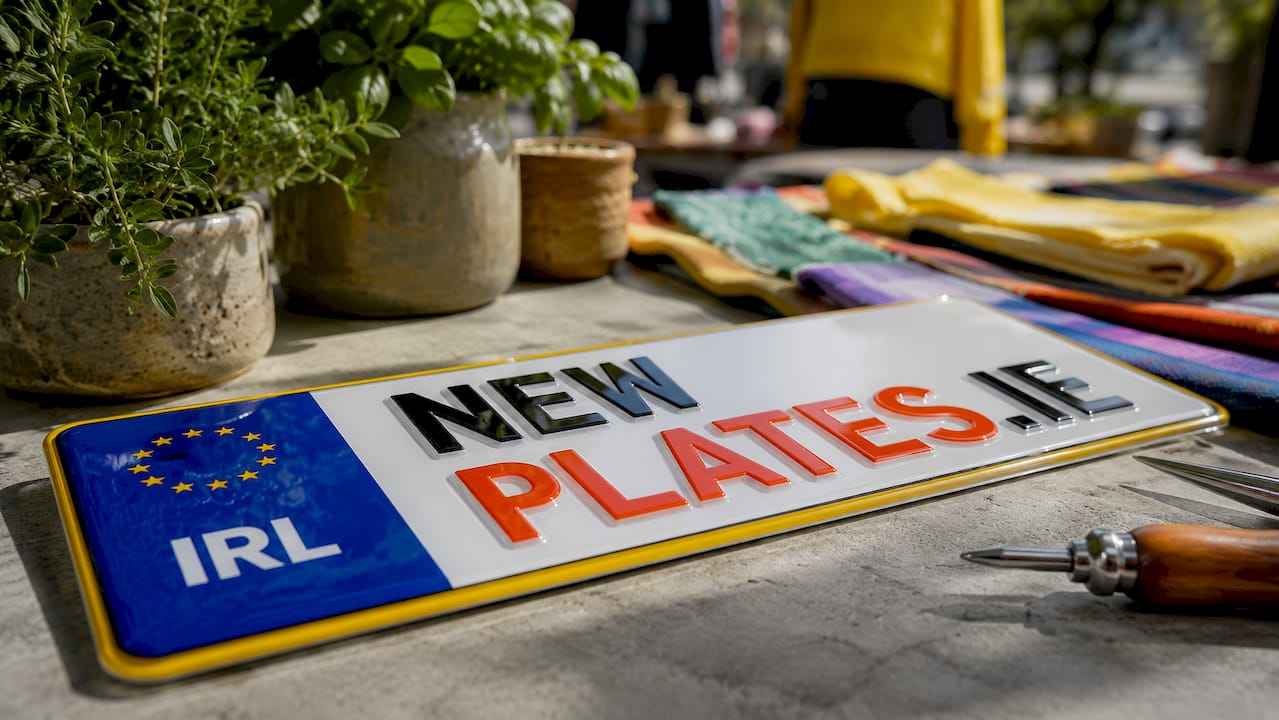
A 3D gel number plate is defined by its raised, domed resin characters, each sitting approximately 2mm above the plate surface with a smooth, glossy "wet look" finish. That subtle elevation is what separates a true 3D gel plate from a standard flat plate. The effect is premium without being aggressive, which is exactly why it suits everything from family saloons to luxury SUVs.
Not every plate marketed as "3D" is the real thing. Some cheaper options use flat 3D printing to simulate depth visually without any actual raised resin. That distinction matters because true domed resin characters behave differently under light, catching angles and giving that signature depth that flat prints simply cannot replicate.
The main alternatives to 3D gel are 2D flat plates and 4D acrylic plates. Here is how they compare:
| Feature | 3D gel plates | 4D acrylic plates |
|---|---|---|
| Character height above surface | ~2mm domed resin | 3–5mm laser-cut acrylic |
| Visual style | Soft, rounded, glossy | Bold, angular, defined |
| Best suited for | Luxury, everyday, understated cars | Performance, modified, statement cars |
| Typical lifespan | 3–5 years | 5–7 years |
| Price range | Mid-range | Higher |
The visual depth difference between 3D gel and 4D acrylic comes down to personal style priorities. If you want a plate that whispers premium rather than shouts it, 3D gel is the right call.
Pro Tip: If a supplier cannot show you a physical sample or a close-up photo of the raised resin characters, ask for one before ordering. Flat 3D printed plates look nearly identical in low-resolution images.
How to ensure your 3D gel plate is fully legal in Ireland
Legal compliance is not optional, and it is not complicated once you know the rules. In Ireland, all road-legal number plates must meet BS AU 145e standards, which specify the Charles Wright font, character height of 79mm, stroke width of 14mm, and character spacing of 11mm. These are fixed requirements. No supplier, no matter how reputable, can legally deviate from them for a road-use plate.
Non-compliance carries real consequences. A plate with a non-standard font or incorrect spacing can trigger an NCT failure and a fine from the gardaí. The plate itself is the evidence, so there is no arguing your way out of it at the roadside.
Here is what to check before placing any order:
- Confirm the supplier uses the Charles Wright font exclusively on road-legal plates.
- Verify character dimensions: 79mm height, 14mm stroke, 11mm spacing.
- Ask for written confirmation of BS AU 145e compliance with your order.
- Check that the supplier is verified to produce road-legal plates in Ireland.
- Review a digital proof of your plate before it goes into production.
Suppliers must explicitly confirm BS AU 145e compliance on every order. Non-standard fonts or creative spacing designed for a unique look immediately void road-legal status, regardless of how good the gel quality is. A plate that looks great but fails compliance is just an expensive decoration.
Pro Tip: Always request a compliance certificate or written confirmation with your order. Reputable Irish suppliers include this as standard. If a supplier hesitates, that hesitation is your answer.
Key style and customization options for 3D gel plates
Once you know the legal boundaries, the creative decisions become much more enjoyable. The good news is that customization options including borders, legal spacing variations, and gel resin color choices give you genuine room to personalize without stepping outside the law.
Gel resin color and finish
Classic black gel resin is the most popular choice and works on virtually every vehicle. It delivers the cleanest contrast against the white or yellow plate background and reads clearly at distance. Carbon fiber effect gel is a growing trend, adding a textured visual layer that suits performance and modified cars particularly well. Some suppliers also offer colored gel options, though these must still meet character legibility standards under Irish regulations.
Border and background options
Borders are one of the easiest ways to add personality within legal limits. A slim black border on a white plate gives a clean, factory-fitted look. A wider border or a colored surround can make the plate feel more custom without touching the character specifications. The reflective background is mandatory for road-legal plates, so any customization sits around that requirement, not instead of it.
Matching style to your vehicle
The choice between 3D gel and 4D acrylic is often a matter of vehicle personality. Consider these pairings:
- Luxury and executive cars: Classic black gel resin on a white background. Clean, understated, and premium.
- Vintage and classic cars: 3D gel suits these well because the rounded finish feels less aggressive than angular 4D characters.
- Everyday family cars: Standard 3D gel with a slim border. Looks great, costs less than 4D, and holds up well.
- Performance and modified cars: Consider 4D legal plates or a carbon fiber gel effect for a bolder statement.
- Motorbikes: Smaller plate formats apply. Check motorbike-specific sizing requirements before ordering.
If you want something with extra visual flair, 3D glitter edge plates add a subtle sparkle to the plate border while keeping the core characters fully compliant.
Step-by-step guide to selecting and ordering your plate
Ordering a 3D gel plate is straightforward when you approach it in the right sequence. Rushing the process is where most mistakes happen.
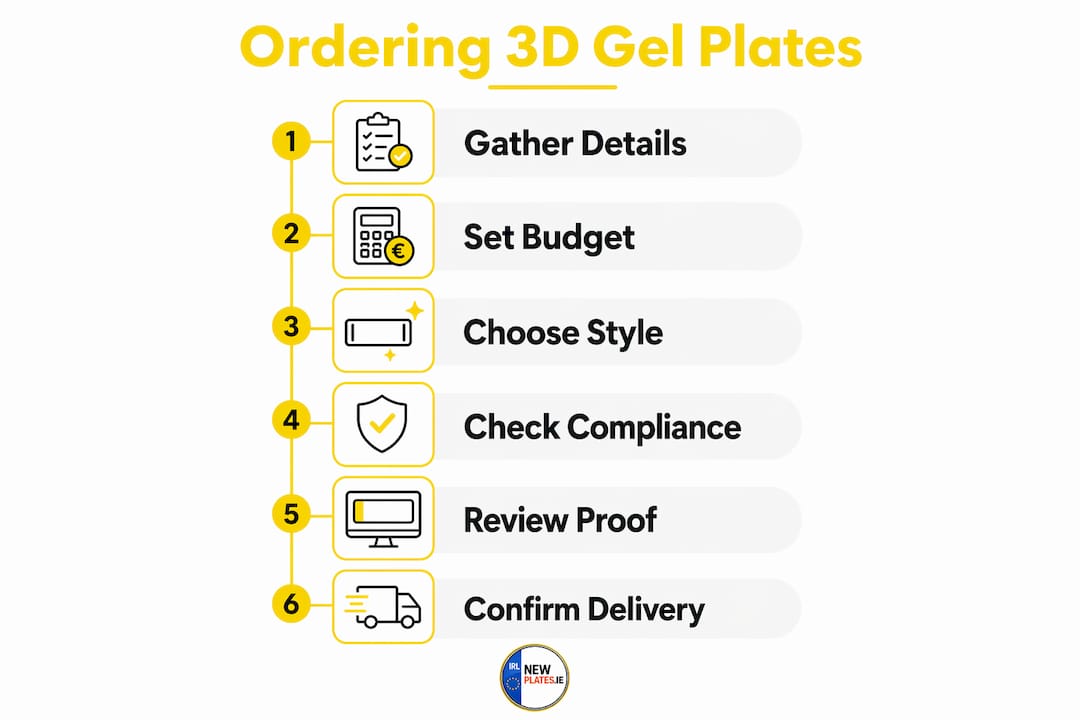
Step 1: Gather your vehicle details. You need your full registration number, vehicle make, and whether you need a front plate, rear plate, or both.
Step 2: Set your budget. 3D gel plates cost approximately €30–€40 per pair in Ireland, sitting comfortably between standard flat plates and premium 4D options. That mid-range price point makes them the most popular upgrade choice for everyday drivers.
Step 3: Choose your style options. Decide on gel resin color, border style, and whether you want any additional design features. Keep all choices within BS AU 145e limits.
Step 4: Verify supplier compliance. Only order from Irish-verified suppliers who can confirm their plates meet road-legal standards. Ordering from verified suppliers is the single most important step in the process.
Step 5: Review your digital proof. Before confirming, check the font, spacing, character size, and overall layout. Mistakes caught at proof stage cost nothing to fix.
Step 6: Confirm delivery details. Most Irish suppliers offer standard and express delivery. Factor in lead time if you need the plates for a specific date, such as an NCT appointment.
Pro Tip: Order both front and rear plates at the same time from the same supplier. Mixing plates from different production runs can result in subtle color or finish differences that are noticeable side by side.
| Order stage | What to check |
|---|---|
| Vehicle details | Full registration, vehicle type |
| Style selection | Gel color, border, legal font confirmed |
| Supplier verification | BS AU 145e compliance certificate |
| Digital proof | Character size, spacing, layout |
| Delivery | Lead time, packaging, tracking |
Common pitfalls and maintenance tips for 3D gel plates
The most common mistake buyers make is prioritizing aesthetics over compliance. A plate with a stylized font or compressed spacing might look sharp in a product photo, but it will not pass an NCT check. Non-standard fonts and creative spacing void road-legal status immediately, regardless of gel quality or supplier reputation.
Durability is the second area where expectations sometimes outpace reality. The UV-cured polyurethane resin used in 3D gel plates can yellow or lose gloss clarity after 3–5 years under intense sunlight. That is a shorter lifespan than 4D acrylic plates, which typically last 5–7 years with better UV resistance. If your car sits in direct sun for most of the day, factor that into your decision.
Here are the key maintenance practices that extend plate life:
- Clean with mild soap and warm water using a soft cloth. Avoid abrasive sponges or harsh chemicals.
- Gentle routine cleaning prevents resin damage and preserves the gloss finish.
- Avoid pressure washing directly at the plate surface. High-pressure water can lift the resin edges over time.
- Inspect the plate every six months for signs of yellowing, cracking, or character lifting.
- Replace the plate if characters begin to peel or the background loses its reflective quality.
Pro Tip: A light application of car wax over the plate surface (avoiding the characters themselves) can add a small layer of UV protection and keep the background looking fresh for longer.
Key Takeaways
Selecting the right 3D gel plate style requires understanding plate types, confirming BS AU 145e compliance, and matching your customization choices to both your vehicle and Irish road-legal standards.
| Point | Details |
|---|---|
| True 3D gel definition | Genuine plates use individually domed resin characters, not flat printed depth illusions. |
| Legal compliance is fixed | BS AU 145e requires Charles Wright font, 79mm characters, 14mm stroke, and 11mm spacing. |
| Style matches vehicle type | Soft gel resin suits luxury and classic cars; bolder 4D acrylic suits performance vehicles. |
| Budget expectation | 3D gel pairs cost approximately €30–€40, making them the best value premium upgrade. |
| Maintenance extends lifespan | Mild soap cleaning and UV awareness keep gel plates looking good for 3–5 years. |
Why I think compliance should come before style every time
People often ask me whether they should prioritize the look of a plate or the legal side of it. My honest answer is that the question itself is a false choice. The best-looking plate in Ireland is the one that does not get you pulled over by the gardaí or flagged at your NCT.
What I have found, after seeing countless plate orders go right and wrong, is that the drivers who end up most satisfied are the ones who locked in compliance first and then made creative decisions within that framework. The legal boundaries are not as restrictive as people fear. You can still get a plate that looks genuinely premium, with a carbon fiber gel finish or a glitter edge border, while staying fully within BS AU 145e requirements.
The other thing worth saying plainly is that 3D gel plates represent excellent value for what they deliver. They sit in a sweet spot between the flat look of a standard plate and the aggressive profile of a 4D acrylic. For most everyday cars, that balance is exactly right. If you drive something that demands a bolder statement, explore the 3D vs 4D comparison before committing.
Classic styles endure for a reason. Black gel resin on a white reflective background has been the most popular choice for years, and it will still look sharp in five years' time. Trends come and go, but a clean, well-made plate never looks dated.
— Patrick
Newplates has your compliant 3D gel plate covered
Newplates offers a full range of road-legal 3D gel Irish number plates built to BS AU 145e standards, with customization options that let you personalize within the law. Every plate comes with compliance confirmation, so you are not left guessing whether your new plates will pass an NCT check.
From classic black gel resin to carbon fiber effects and glitter edge finishes, Newplates covers the full spectrum of popular 3D plate styles. The ordering process is straightforward: choose your style, review your digital proof, and receive your plates with full documentation. Prices start at competitive rates for pairs, making a premium upgrade accessible for any budget. Browse the full 3D gel plate range and find the style that fits your car and your standards.
FAQ
What makes a 3D gel plate road-legal in Ireland?
A 3D gel plate is road-legal in Ireland when it meets BS AU 145e standards, including the Charles Wright font, 79mm character height, 14mm stroke width, and 11mm spacing. Non-standard fonts or spacing void legal status regardless of gel quality.
How long do 3D gel plates last?
3D gel plates typically last 3–5 years before the UV-cured resin begins to yellow or lose gloss clarity. Proper cleaning with mild soap and avoiding abrasive tools extends that lifespan.
Are 3D gel plates better than 4D acrylic plates?
3D gel plates offer a softer, rounded finish suited to luxury and everyday cars, while 4D acrylic plates deliver bolder, sharper characters that suit performance vehicles. The best choice depends on your vehicle type and personal style preference.
Can I customize a 3D gel plate and keep it legal?
Yes. Customization options including border styles, gel resin color, and legal spacing variations are all available within BS AU 145e limits. Font type and character dimensions cannot be altered for road-legal plates.
How do I spot a fake 3D gel plate?
True 3D gel plates have individually raised domed resin characters approximately 2mm above the surface. Cheaper alternatives use flat 3D printing to simulate depth visually without any actual raised resin, which is detectable by touch and close inspection.