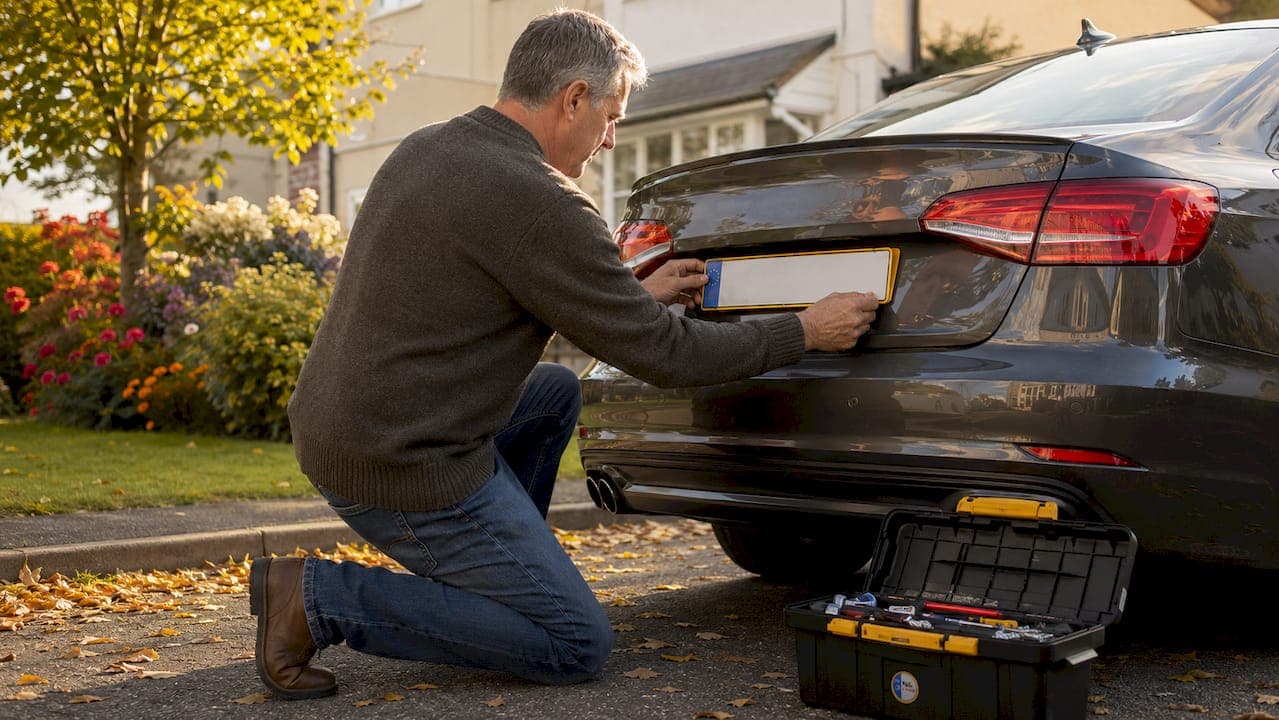
Fitting a custom plate at home is defined as the process of fabricating and mounting a legally compliant number plate on your vehicle without professional assistance. In Ireland, this process is tightly governed by law. The Road Traffic Acts and associated regulations set strict rules on character size, font, reflectivity, and background color. Getting it wrong is not just an aesthetic problem. Non-compliance is a criminal offense that can result in fines up to €5,000 and an automatic NCT failure. This guide covers every step, from legal requirements to final mounting, so you get it right the first time.
What legal requirements must custom number plates meet in Ireland?
Irish number plate law leaves very little room for creativity when it comes to road use. Irish law requires legible black sans-serif characters on a white reflective background for the front plate and a yellow reflective background for the rear. These are not suggestions. They are statutory requirements.
The character dimensions are equally fixed. Characters must be no more than 70mm high and 36mm wide, with a 10mm stroke width. Any deviation from these measurements, even a millimeter or two, can cause an NCT failure. That is not an exaggeration. Minor non-conformities in stroke width or spacing are a known cause of inspection rejection.
Here is a quick reference for the core legal specifications:
| Specification | Requirement |
|---|---|
| Character height | Maximum 70mm |
| Character width | Maximum 36mm |
| Stroke width | 10mm |
| Font style | Black sans-serif only |
| Front background | White reflective |
| Rear background | Yellow reflective |
A few other rules are worth knowing before you pick up a drill or a vinyl cutter:
- No vanity or personalized text. Irish regulations do not permit personalized plates. Registration numbers are assigned sequentially and cannot be altered.
- No stylized fonts. Decorative lettering, italic characters, or novelty fonts are all illegal on road-use plates.
- No tinted covers or obscuring accessories. Anything that reduces legibility is an offense.
- No non-standard colors. The white front and yellow rear rule applies regardless of your vehicle's color scheme.
The Gardaí can issue a €60 Fixed Charge Notice for illegal plates on the spot. That is before any NCT failure costs are factored in. The takeaway here is simple: "custom" in the Irish context means a plate that reflects your registration number in a compliant format, not a plate that reflects your personality.
What materials and tools do you need to prepare a custom plate at home?
The right materials make the difference between a plate that passes inspection and one that gets you pulled over. Reflective acrylic sheets in the correct white and yellow colors are the standard base material for road-legal plates in Ireland. Standard acrylic sheeting sold for signage purposes does not automatically meet reflectivity standards, so you need to source materials specifically rated for number plate use.
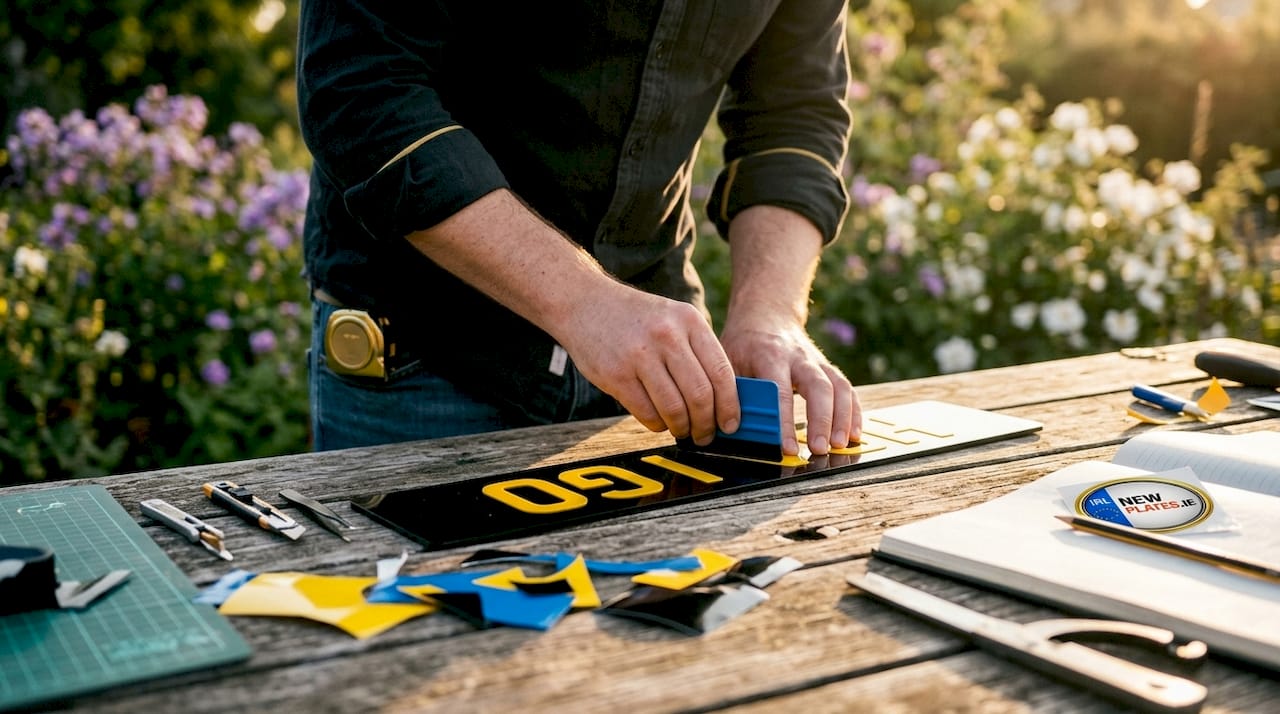
For the characters, adhesive vinyl is the most accessible option for home fabrication. You apply it to the plate surface, then use transfer paper to position it accurately. This DIY method using adhesive vinyl with transfer paper is a recognized hobby approach, but it does not guarantee legal compliance on its own. The vinyl must be cut to exact statutory dimensions.
Here is a comparison of the main materials and tools you will need:
| Item | Purpose | Compliance note |
|---|---|---|
| Reflective acrylic sheet | Plate base | Must meet Irish reflectivity standards |
| Adhesive vinyl (black) | Character production | Must match exact statutory dimensions |
| Transfer paper | Accurate character placement | No compliance impact |
| Vinyl cutter or stencil | Cutting characters to size | Manual cutting risks dimensional error |
| Mounting screws and sticky pads | Securing plate to vehicle | Standard hardware, widely available |
| Screwdriver | Fitting screws | No compliance impact |
| Measuring tape and ruler | Verifying character dimensions | Critical for compliance |
| Safety glasses and gloves | Personal protection | Recommended for cutting and spraying |
Your workspace matters too. Work on a flat, clean surface in good lighting. Dust or debris under the vinyl causes bubbles that distort characters and can affect legibility. A well-lit garage or utility room works well.
Pro Tip: Before purchasing any acrylic sheet or vinyl, verify with the supplier that the material meets Irish number plate reflectivity standards. A certificate or product specification sheet is the clearest proof.
3D gel and 4D laser-cut acrylic plates can also be legal if they fully meet Irish dimensional and reflectivity standards. Many low-cost versions sold online do not comply, so always check before buying. Professional plates from a certified supplier remove this uncertainty entirely.
How to design and produce the custom plate artwork legally at home
Producing compliant plate artwork at home requires more precision than most people expect. The process is not simply printing letters and sticking them on. Every character must conform to the statutory font and dimensions described in Irish law. Ireland does not permit any deviation from the official character style and layout, unlike some other jurisdictions.
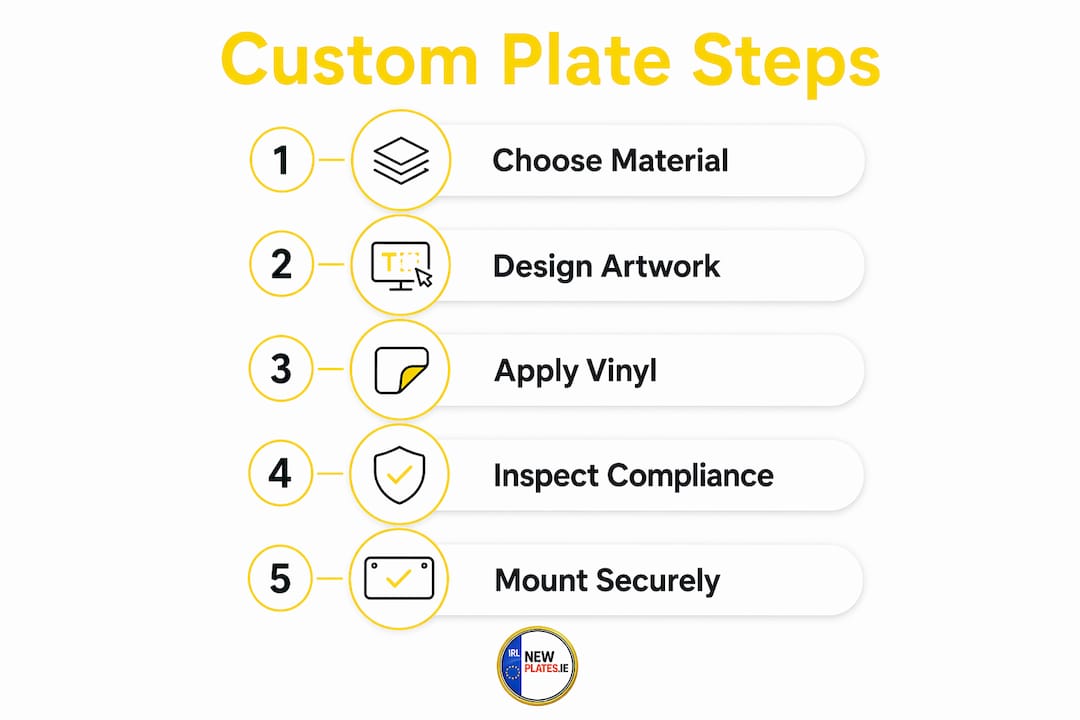
Follow these steps to produce the artwork correctly:
- Set up your design file. Use design software such as Adobe Illustrator, Inkscape (free), or CorelDRAW. Set the canvas to the exact plate dimensions. Create character guides at 70mm height and 36mm width.
- Select the correct font. Irish plates use a specific sans-serif character style. Source a font that matches the statutory specification precisely. Do not substitute a similar-looking font.
- Lay out your registration number. Space characters according to the legal requirements. Incorrect spacing is one of the most common causes of NCT failure.
- Export and cut. Export your design to a vinyl cutter if you have one, or print it as a stencil template. Manual cutting with a craft knife is possible but increases the risk of dimensional error.
- Apply the vinyl characters. Place transfer paper over the cut vinyl. Peel the backing carefully and apply to the reflective acrylic base. Use a squeegee or credit card to press out air bubbles from the center outward.
- Remove the transfer paper slowly. Peel at a low angle to avoid lifting the vinyl edges. Check each character for clean edges and full adhesion.
- Inspect against statutory measurements. Use a ruler to verify character height, width, and stroke thickness before the plate goes anywhere near your vehicle.
Pro Tip: Print a paper template of your full plate design at actual size before cutting any vinyl. Hold it against the plate base to check spacing and alignment visually. This catches errors before they cost you materials.
Small differences in stroke thickness or spacing can invalidate a plate despite it looking correct to the naked eye. ANPR cameras and NCT inspectors work to tighter tolerances than human vision. Treat every measurement as non-negotiable.
Common design errors that cause NCT failures include using a font that is visually similar but not statutorily correct, spacing characters by eye rather than by measurement, and applying vinyl over a surface that has not been cleaned properly. Each of these is avoidable with the right preparation.
How to safely fit and mount the custom plate on your vehicle at home
Mounting is the final step, and it carries its own compliance requirements. A plate that is correctly made but poorly mounted can still fail an inspection. Enforcement focuses on plate legibility and non-obstruction, which means placement and mounting precision matter as much as the plate itself.
Follow these steps for a secure, compliant fit:
- Remove the old plate. Unscrew or peel off the existing plate. Clean the mounting area thoroughly with a damp cloth and allow it to dry completely.
- Check the mounting surface. The surface must be flat and free of rust, old adhesive, or debris. Any unevenness affects alignment.
- Align the new plate. Hold the plate against the mounting point and check that it sits level. Use a spirit level if you want to be exact.
- Attach with screws or sticky pads. Fitting kits with number plate screws and sticky pads provide a secure and clean finish. Screws give a more permanent hold. Sticky pads work well on smooth surfaces and avoid drilling.
- Verify the display angle. The plate must face forward and be fully visible. No part of the plate should be obscured by a tow bar, bumper trim, or any accessory.
Once fitted, keep these maintenance points in mind:
- Inspect the plate monthly for dirt buildup, especially around character edges.
- Check that screws remain tight after washing or rough weather.
- Replace sticky pads if the plate shows any movement or lifting at the corners.
- Never fit a plate cover, tinted film, or frame that partially obscures the characters.
What are common mistakes and troubleshooting tips when fitting custom plates at home?
Most home plate fitting problems fall into a small number of categories. Knowing them in advance saves time, money, and a potential roadside conversation with the Gardaí.
"The biggest professional risk for DIY plates is compliance failure, so home assemblers should prioritize official measurements and materials over aesthetics initially." — Vehicle registration plates of the Republic of Ireland
The most common mistakes include:
- Wrong font or spacing. Using a font that looks right but does not match the statutory specification. Always verify against the legal standard before cutting.
- Poor reflectivity. Using standard acrylic or vinyl that does not meet Irish reflectivity requirements. The plate may look fine in daylight but fail under ANPR or NCT lighting tests.
- Uneven character application. Bubbles, lifted edges, or misaligned characters all affect legibility. Take time with the squeegee step and inspect each character individually.
- Incorrect mounting angle. A plate tilted downward or partially hidden by a bumper accessory is an offense, even if the plate itself is perfectly made.
- Cheap adhesives. Low-quality sticky pads fail in wet Irish weather. Use mounting kits rated for outdoor use.
Alterations such as stylized fonts, oversized characters, or tinted covers invalidate plates under Irish law. If you discover any of these issues after fitting, remove the plate before driving. Driving with a non-compliant plate is not a gray area.
When to seek professional help: if your vinyl cutting is not producing characters within the statutory tolerances, or if your reflective material cannot be verified as compliant, order a professionally made plate instead. Professional plate makers use CNC cutting or laser engraving to achieve tolerances that are beyond most home setups. There is no shame in recognizing that limit.
Key takeaways
Fitting a custom plate at home in Ireland requires legally compliant materials, exact character dimensions, and secure mounting to pass NCT inspection and avoid Gardaí enforcement.
| Point | Details |
|---|---|
| Legal compliance is non-negotiable | Characters must be black sans-serif, max 70mm high, on reflective white or yellow backgrounds. |
| Material quality determines compliance | Use reflective acrylic and vinyl rated for Irish number plate standards, not generic signage materials. |
| Precision in design prevents NCT failure | Even minor deviations in stroke width or spacing can invalidate a plate at inspection. |
| Mounting matters as much as fabrication | Plates must be level, unobscured, and securely attached using proper screws or rated sticky pads. |
| Know when to go professional | If home tools cannot meet statutory tolerances, a certified supplier removes the compliance risk entirely. |
Why I think most DIY plate guides miss the most important point
Most guides on how to fit a custom plate at home focus almost entirely on the craft side. They talk about vinyl types, spray paint techniques, and squeegee angles. That is all useful. But the single most important thing I have learned from watching people go through this process is that the legal dimension gets underestimated almost every time.
People assume that if a plate looks right, it is right. It is not. Accurate reflectivity and exact character dimensions are what make a plate readable to ANPR cameras and acceptable to NCT inspectors. A plate that passes the eye test can still fail the measurement test. I have seen it happen with plates that looked genuinely professional.
The other thing people overlook is mounting. A perfectly fabricated plate fitted at a slight downward angle, or partially obscured by a tow bar bracket, is still a non-compliant plate. The Gardaí are not checking your vinyl technique. They are checking whether your registration is clearly visible and legible from the required distance.
My honest advice: treat the legal specifications as your design brief, not as a checklist you review at the end. Build compliance in from the first measurement, not as an afterthought. And if your home setup cannot reliably hit the statutory tolerances, order from a certified supplier. The €15.99 starting price at Newplates makes that an easy call.
— Patrick
Newplates has the compliant plates and fitting kits you need
If the DIY route feels like more precision work than you signed up for, Newplates has you covered. The range includes road-legal 3D gel plates and standard NCT-compliant number plates produced to exact Irish statutory specifications, starting from €15.99. Every plate is made to the correct character dimensions, reflectivity standards, and background colors required by Irish law.
Newplates also supplies number plate fitting kits with screws and sticky pads so you can complete the home fitting step with confidence. Whether you want a standard replacement, a 3D gel upgrade, or a show plate for off-road use, the full range is available at newplates.ie. Ordering takes minutes, and the plates arrive ready to fit.
FAQ
What does "custom plate" mean under Irish law?
In Ireland, a custom plate means a plate produced to your vehicle's assigned registration in a legally compliant format. Personalized or vanity text is not permitted under Irish road traffic regulations.
Can I use any font when making a plate at home?
No. Irish plates must use a specific black sans-serif character style. Any substitution, even a visually similar font, is a legal offense and will cause NCT failure.
What happens if my homemade plate fails the NCT?
Your vehicle will not pass the NCT, and you will need to replace the plate before re-testing. Driving with a non-compliant plate also risks a €60 Fixed Charge Notice from the Gardaí and potential fines up to €5,000.
Are 3D gel plates legal in Ireland?
3D gel plates can be legal if they fully meet Irish dimensional, reflectivity, and font standards. Many low-cost versions sold online do not comply, so always verify before purchasing.
What is the best way to mount a plate at home?
Clean the mounting surface, align the plate level, and secure it with a fitting kit that includes rated screws or sticky pads. The plate must be fully visible and unobscured from the front or rear of the vehicle.