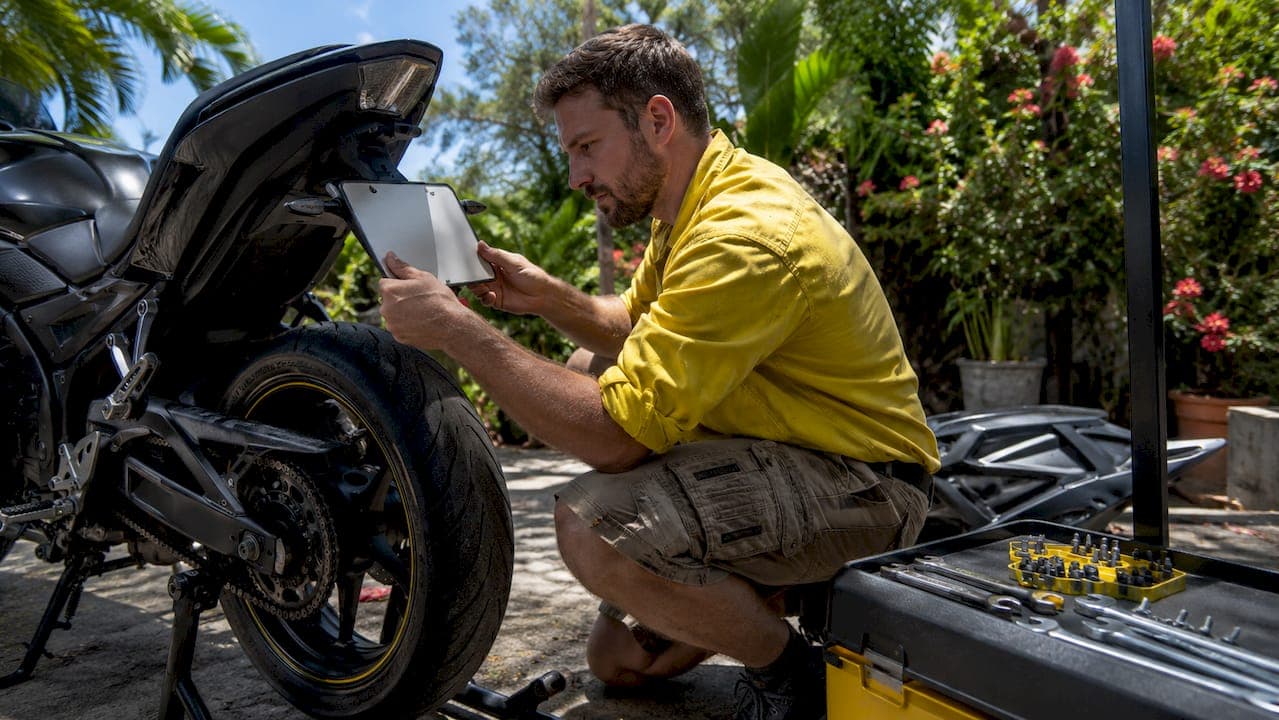
Fitting a number plate to a motorcycle is the process of securely mounting a road-legal, compliant registration plate to the rear of your bike so it remains visible, legible, and correctly positioned at all times. Get it wrong and you are not just risking a fine. You are handing enforcement cameras an easy target. Motorcycles registered on or after 1 September 2001 must display a plate at the rear only, which means there is no excuse for a poorly fitted, bent, or obscured plate. This guide covers every step, from legal requirements to final inspection, so you can fit your plate correctly the first time.
What legal requirements must your motorcycle number plate meet?
The legal framework for motorcycle registration plates in the UK is more specific than most riders realise. Legal motorcycle plates must conform to British Standards, which means a reflective yellow background at the rear with black characters, correct character height and spacing, and mandatory manufacturer details printed on the plate itself.
Here is what the law requires for any plate fitted to a UK motorcycle:
- Rear plate only for bikes registered after 1 September 2001. Front plates are optional on older machines but not required.
- Reflective yellow background with black characters at the rear, conforming to British Standard BS AU 145d or later.
- Character height of 64mm, with a stroke width of 10mm and specific spacing between characters and groups.
- Mandatory markings including the BS number, the manufacturer's postcode, and the plate supplier's details. Manufacturers' stamps and BS numbers allow authorities to trace plate compliance and authenticity.
- No modifications that impair readability. Italicised fonts, stylised characters, or tinted backgrounds are all illegal.
| Specification | Requirement |
|---|---|
| Background colour (rear) | Reflective yellow |
| Character colour | Black |
| Character height | 64mm |
| Stroke width | 10mm |
| Standard | BS AU 145d or later |
| Supplier details | Mandatory on plate |
Whether a front plate is required hinges almost entirely on the motorcycle's registration date. If your bike was registered before September 2001, you may choose to display one at the front, but it must still meet all the same standards. Non-standard plates can be hard to read by cameras, and enforcement penalties apply regardless of whether you thought the plate looked fine.
What tools do you need to fit a motorcycle number plate?
Preparing the right tools before you start saves time and prevents the kind of misalignment that causes compliance headaches later. Accuracy in marking drill points is what separates a plate that sits straight from one that looks like it was fitted in a hurry.
You will need the following:
- Screwdriver (flathead and Phillips, depending on your bracket hardware)
- Power drill with a bit sized to your fasteners
- Measuring tape to confirm plate position and spacing
- Marker or pencil for accurate drill point marking
- Number plate bracket or holder compatible with your specific motorcycle model
- Fasteners: stainless steel screws, bolts, or adhesive pads rated for outdoor use
On the subject of adhesive pads, using adhesive pads instead of screws is popular but may not always comply with road regulations, depending on permanence and visibility. Screws are the safer choice for a permanent road-legal installation. Adhesive pads are better suited to show plates or temporary display.
Number plate holders and brackets must be chosen to fit the motorcycle model, since compatibility varies between street bikes, cruisers, and dirt bikes. A bracket designed for a Kawasaki Z900 will not necessarily suit a Honda CB500F. Check fitment before you buy.
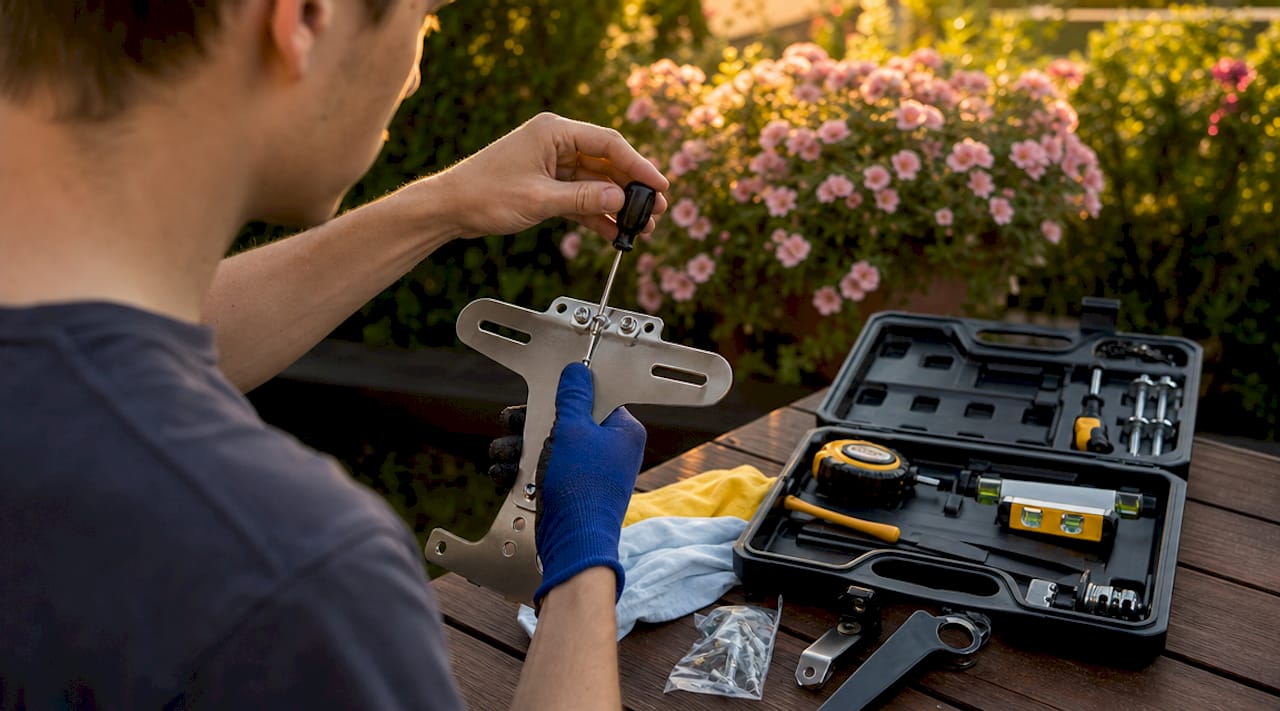
Pro Tip: Buy stainless steel screws rather than standard zinc-plated ones. Road salt and rain will corrode zinc fixings within a season, and a plate that falls off at speed is both dangerous and an instant police matter.
How to install a motorcycle number plate step by step
Follow this sequence carefully. Rushing any stage, particularly the marking and drilling, is the most common cause of a misaligned plate.
-
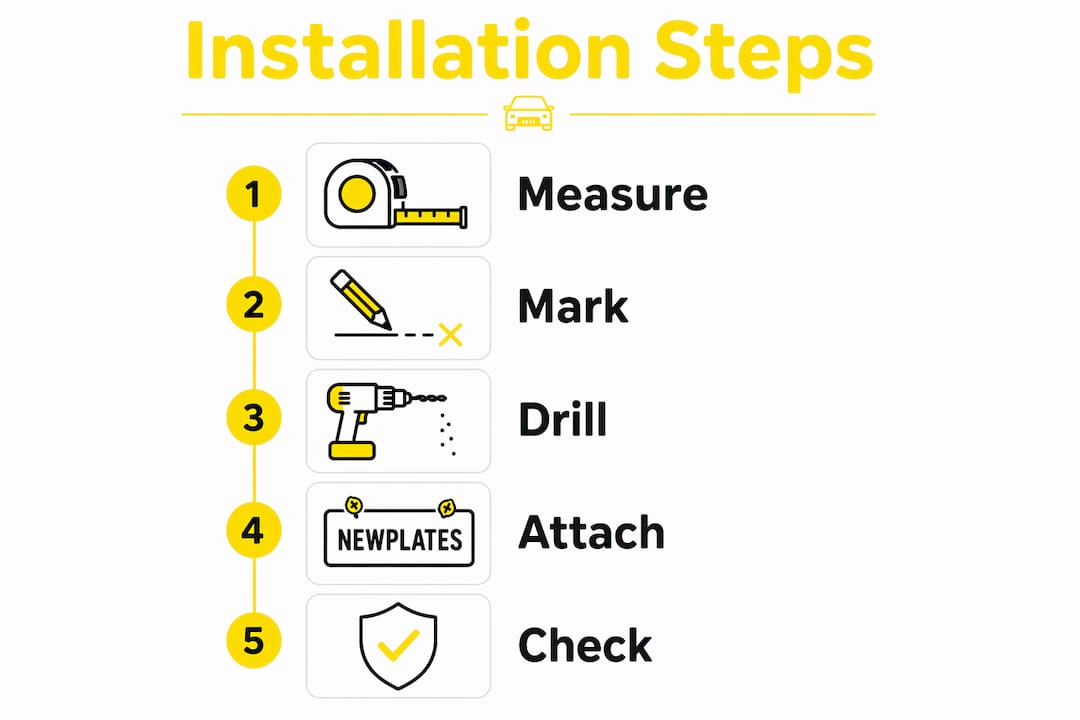
Clean the mounting area. Remove any dirt, old adhesive, or rust from the bracket or mudguard where the plate will sit. A clean surface gives you accurate measurements and better fastener grip.
-
Check bracket compatibility. Offer the bracket up to the mounting point before drilling anything. Confirm it sits flush and level. A bracket that rocks or tilts will produce a non-compliant plate angle from day one.
-
Mark your drill points. Use a measuring tape and marker to position the plate centrally on the bracket. Accuracy in marking drill points ensures alignment and compliance. Double-check measurements before committing.
-
Drill the holes. Use a drill bit that matches your screw diameter. Drill slowly and steadily to avoid cracking the plate material. If you are drilling into a plastic mudguard, use a sharp bit and low speed.
-
Attach the plate to the bracket. Feed screws through the plate holes and into the bracket. Do not overtighten. Overtightening cracks the plate at the fixing points, which weakens the material and can cause the plate to split on a bumpy road.
-
Mount the bracket to the bike. Secure the bracket to the motorcycle's existing mounting points using the appropriate bolts. Torque to the manufacturer's specification if listed.
-
Check the angle. Proper mounting includes ensuring the plate is perpendicular and easily legible, avoiding angles that defeat camera detection. Step back and view the plate from directly behind the bike. It should sit flat and face rearward, not upward or downward.
-
Final visual check. Confirm the plate is centred, level, and fully unobstructed by bodywork, exhausts, or luggage fittings.
| Step | Key action | Common error |
|---|---|---|
| Mark drill points | Measure twice, mark once | Eyeballing position |
| Drill holes | Match bit to screw diameter | Oversized holes, cracked plate |
| Attach plate | Finger-tight then snug | Overtightening, cracking |
| Check angle | Perpendicular to road surface | Tilted upward or downward |
Pro Tip: Take a photo of the fitted plate from directly behind the bike at number-plate height. If you can read every character clearly in the photo, an ANPR camera almost certainly can too.
Common mistakes when fitting motorcycle number plates
Even experienced riders make avoidable errors when fitting plates. The consequences range from a minor re-fit to a court appearance, so it is worth knowing what to watch for.
-
Bending or tilting the plate. A slight tilt or bend can cause automated cameras to fail to capture the plate correctly. This is a known tactic, and enforcement agencies know it too. A May 2026 case involved a rider bending their rear plate upwards to avoid camera capture and was charged. The plate angle is not a grey area.
-
Partial obstruction by bodywork. Aftermarket tail units, luggage racks, and custom mudguards frequently obscure part of the plate. Every character must be fully visible from directly behind the bike.
-
Using the wrong bracket. A bracket that does not match your bike's mounting points forces you to improvise, which usually results in a plate that sits at an odd angle or vibrates loose.
-
Assuming a smaller plate is fine. Some riders fit undersized plates believing they are harder to read. Misplaced or modified characters can lead to enforcement penalties despite popular misconceptions. The legal dimensions are fixed, and there is no minimum-visibility loophole.
-
Relying solely on adhesive pads. Adhesive fixings can fail in wet or cold conditions. A plate that detaches at motorway speed is a road hazard and an automatic offence.
"Non-compliance is increasingly detected through camera enforcement, reducing the reliance on random traffic stops. Modern ANPR systems flag non-standard plates automatically, meaning the risk is constant, not just when a patrol car happens to be nearby." — Scootering Magazine
How do you verify your plate is legal after fitting?
Post-installation checks are not optional. A plate that looks fine to the naked eye can still fail compliance if the spacing is off or the angle is wrong.
Run through this checklist after every fitting:
- Colour and reflectivity. The rear plate must have a reflective yellow background. Hold a torch to it in low light. If it does not reflect clearly, the plate material may not meet BS AU 145d.
- Character spacing and size. Measure character height (64mm) and the gap between character groups (89mm between the age identifier and the random letters). These are not approximate figures.
- Supplier markings. Check the bottom of the plate for the BS number, manufacturer postcode, and supplier details. A plate without these markings is not road legal, regardless of how it looks.
- Plate angle. Stand directly behind the bike and confirm the plate faces rearward, not skyward. Even minor physical mis-mounting can trigger police action or technical failures.
- Obstruction check. Ask someone to stand behind the bike while you sit on it in riding position. Confirm the plate is fully visible with no bodywork, exhausts, or accessories blocking any part of it.
If you are uncertain whether your plate meets current DVLA requirements, consult the official DVLA guidance or contact a trusted supplier such as Newplates, who can confirm whether your plate specification is compliant before you fit it. Replacing a non-compliant plate before an inspection is always cheaper than the alternative.
Key takeaways
Fitting a legal motorcycle number plate requires a compliant plate, the correct tools, accurate installation, and a post-fit compliance check before riding.
| Point | Details |
|---|---|
| Rear-only plate rule | Bikes registered after 1 September 2001 need a rear plate only, not a front one. |
| British Standard compliance | Plates must meet BS AU 145d, with reflective yellow background and correct character dimensions. |
| Accurate installation | Mark drill points carefully, keep the plate perpendicular, and use stainless steel fixings. |
| Avoid plate tilting | Even a slight bend or tilt is a criminal offence and is detected by ANPR cameras. |
| Post-fit verification | Check colour, spacing, supplier markings, and angle before riding on public roads. |
Why I think most riders underestimate the plate fitting process
Most riders treat fitting a number plate as a five-minute job with a screwdriver. I have seen too many bikes on the road with plates that are visibly tilted, partially obscured by aftermarket tail tidy kits, or fitted with adhesive pads that have started to peel at the corners. None of those riders thought they were doing anything wrong.
The shift to ANPR camera enforcement changes the risk calculation entirely. It used to be that a slightly dodgy plate only mattered if a patrol officer happened to be behind you. Now, every motorway gantry and urban camera is checking your plate automatically. The enforcement is constant, not occasional.
What I always recommend is treating the fitting process the same way you would treat a tyre change. You would not bodge a tyre fitting and hope for the best. The same logic applies here. Get a compliant plate from a reputable supplier, use the right bracket for your specific bike model, and take ten minutes to do the post-fit checks properly. The motorbike number plate regulations are not complicated once you read them. The problem is that most riders never do.
One more thing: aesthetics and legality are not mutually exclusive. A well-fitted, correctly sized plate on a quality bracket looks far better than a bent, cable-tied aftermarket plate anyway. You can have both.
— Patrick
Get a compliant motorcycle plate from Newplates

Newplates supplies road-legal motorbike number plates built to British Standard specifications, with options for standard plates, 3D gel plates, and custom designs. Every plate includes the mandatory BS number, manufacturer postcode, and supplier details printed as standard. Prices start from €15.99, and the range covers motorcycles, scooters, and custom builds. If you need mounting hardware alongside your plate, Newplates also stocks a full range of fitting kits and accessories designed specifically for motorbikes. Order online and have a compliant, correctly specified plate ready to fit before your next ride.
FAQ
Do motorcycles need a front number plate in the UK?
Motorcycles registered on or after 1 September 2001 are required to display a rear plate only. Front plates are optional on older bikes but must still meet British Standard specifications if fitted.
What size must a motorcycle number plate be?
Characters must be 64mm tall with a 10mm stroke width. The gap between the age identifier and the random letter group must be 89mm. These dimensions are fixed by BS AU 145d and cannot be reduced.
Can I use adhesive pads to secure a motorcycle number plate?
Adhesive pads can be used but may not always meet road regulations if the fixing is not sufficiently permanent. Stainless steel screws are the recommended fastening method for a road-legal, long-term installation.
Is it illegal to tilt a motorcycle number plate?
Yes. Tilting or bending a plate to avoid camera detection is a criminal offence. A May 2026 case confirmed that a rider was charged after bending their rear plate upward to obstruct camera capture.
What markings must appear on a legal motorcycle number plate?
A legal plate must display the BS number, the manufacturer's postcode, and the plate supplier's details. Plates produced after 2001 without these markings are not road legal regardless of their appearance.