A legal custom motorbike plate is defined as any personalized registration plate officially issued by the relevant state or national authority, mounted unaltered on a vehicle used on public roads. In Ireland, the Road Traffic (Vehicles) Act and the National Car Test (NCT) regulations set the standards that every plate must meet. Riders who want a custom motorbike plate without breaking the law have two compliant paths: officially issued personalized plates and specialty plates that meet all dimensional and reflectivity requirements. Anything else, including painted plates, replica plates, or plates with obscuring covers, is illegal and carries real consequences.
What legal options exist for customizing your motorbike plate
The term "personalized motorcycle plate" covers a specific category of officially issued registration plates, not a free-for-all design exercise. In Ireland, the Road Traffic Acts govern what appears on a plate, how large the characters must be, and what materials are permitted. Riders who want to express some individuality within those rules have a few genuine options.
Official personalized plates allow you to choose a specific registration combination within approved formats. The characters, font, and reflective background must all conform to the standards set by the Road Safety Authority (RSA) and the Department of Transport. The plate itself must be manufactured by an approved supplier.
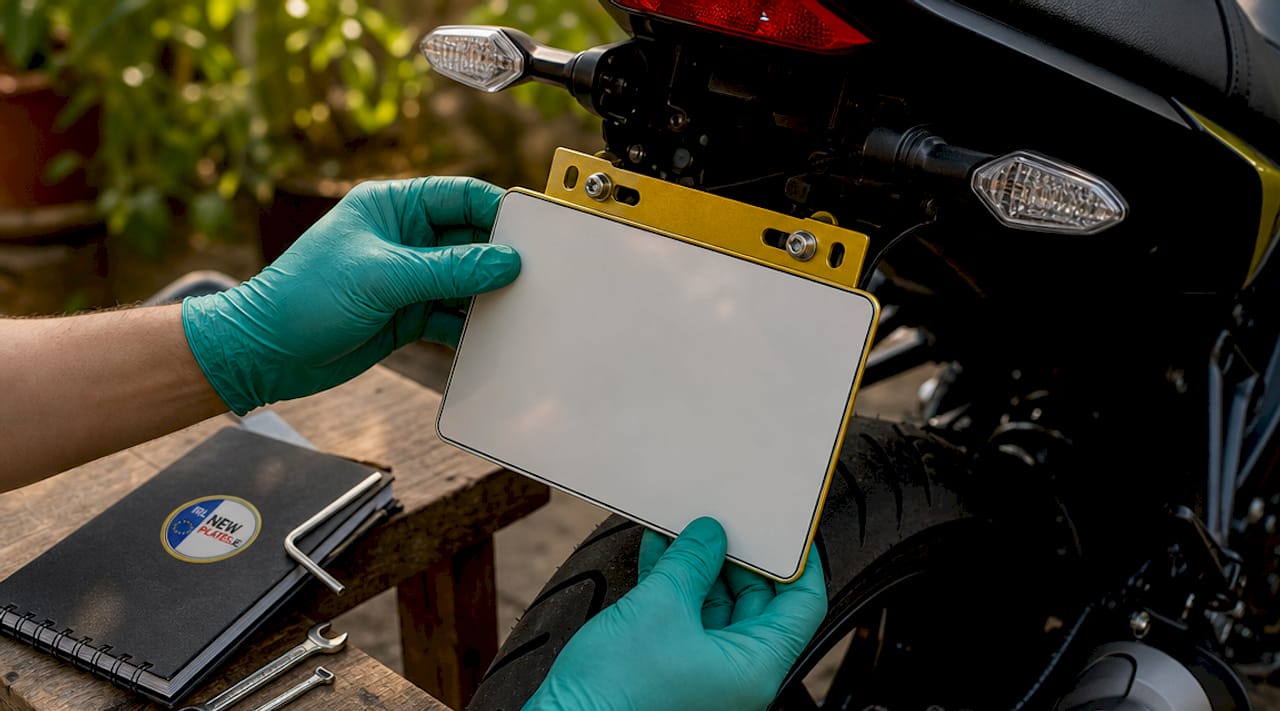
Specialty and 3D or 4D gel plates represent the most popular way to add visual distinction while staying road legal. 3D gel plates use raised acrylic lettering bonded to a reflective background. They meet NCT compliance requirements when produced to the correct character height and spacing. The visual effect is striking without touching any legal boundary.
Aftermarket covers and frames are where many riders unknowingly cross the line. Clear or tinted covers are considered violations under Vehicle Code 4464 in jurisdictions like California and Texas, and Irish regulations take a similarly firm stance on anything that reduces reflectivity or obscures characters. A frame that clips even one millimeter over a digit is asking to be pulled over.
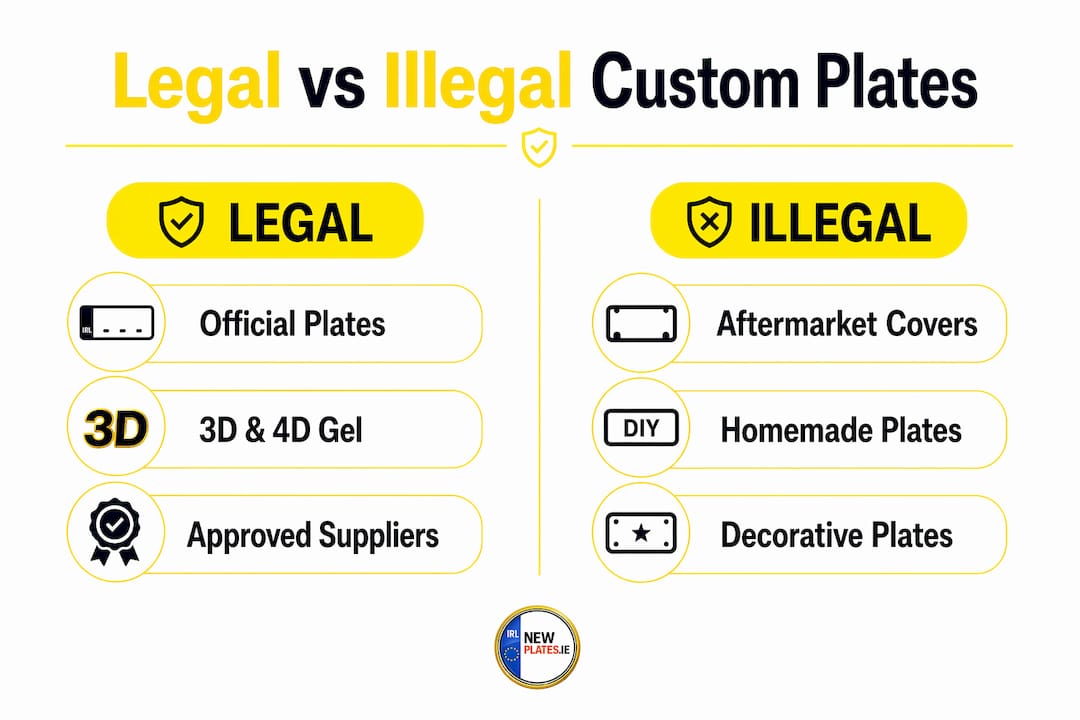
Here is a quick comparison of the main options:
| Option | Legal status | Customization level |
|---|---|---|
| Official personalized plate | Fully legal | Text combination only |
| 3D or 4D gel plate (approved supplier) | Fully legal | Visual texture and finish |
| Specialty show plate | Legal on private property only | High, any design |
| Aftermarket cover or tinted frame | Illegal on public roads | Cosmetic only |
| Homemade or painted plate | Illegal on public roads | Unlimited but worthless |
Pro Tip: Always confirm that your plate supplier is approved under Irish regulations before ordering. A plate that looks compliant but was made without proper materials will fail an NCT inspection.
How to get a legal custom motorbike plate step by step
Getting a compliant personalized plate is a straightforward process once you know the correct channels. The steps below apply to riders in the Republic of Ireland, where the RSA and the Motor Tax Office oversee vehicle registration.
-
Check your eligibility. Confirm that your motorbike is currently registered and that your motor tax is up to date. You cannot transfer or personalize a plate on a vehicle with outstanding registration issues.
-
Choose an approved plate format. Irish motorcycle plates follow a specific year and county code format. Personalized combinations must fit within that structure. You cannot invent a random string of characters and call it a registration.
-
Select an approved manufacturer. Motorbike number plates must be produced by a supplier who uses the correct reflective materials, approved fonts, and correct character dimensions. Ordering from an unapproved source voids the compliance guarantee regardless of how good the plate looks.
-
Specify your finish. This is where legal personalization gets interesting. You can choose standard flat plates, 3D gel raised lettering, or 4D laser-cut acrylic lettering. All three are road legal in Ireland when produced to the correct specification. The 4D option in particular has become popular with motorcycle enthusiasts because the depth of the lettering catches light in a way that standard plates simply do not.
-
Submit your order and verify the details. Double-check every character before confirming. Applying for official plates via official portals requires accurate information, and errors on a submitted order can delay delivery or require a full reorder.
-
Install the plate correctly. Plates must be mounted visibly and unaltered, securely fastened within allowable tilt angles. On a motorbike, the rear plate is the primary legal requirement. Do not tilt it excessively for aesthetic reasons. Enforcement cameras are not forgiving.
Pro Tip: Take a photograph of your installed plate from 20 meters away in daylight. If you cannot read every character clearly, the Gardaí and ANPR cameras will have the same problem. Fix it before you ride.
What are the risks of illegal plate modifications?
Riders sometimes underestimate how seriously authorities treat plate tampering. The consequences are not limited to a small fine and a warning.
- Painting or wrapping a plate is illegal regardless of how tasteful the result looks. Painted, wrapped, or modified plates are prohibited under vehicle codes in multiple jurisdictions, and Irish regulations align with this position.
- DIY or replica plates are not street legal under any circumstances. Self-made or painted plates can invalidate your insurance or registration, which turns a cosmetic choice into a serious financial and legal liability.
- Covers that obscure characters are a common trap. Even a clear plastic cover can cause glare that defeats ANPR cameras, and aftermarket covers often reduce reflectivity enough to trigger an enforcement stop.
- Non-standard fonts or character spacing are flagged immediately by automated systems. Law enforcement uses ANPR technology to enforce plate legibility, and any obscuring modification triggers immediate enforcement regardless of intent.
- Off-road decorative plates are a specific category worth understanding. Non-DOT compliant off-road tags are valid only on private property. The moment you ride onto a public road with one, you are unregistered in the eyes of the law.
"The plate on your motorbike is not decoration. It is the primary identifier that connects your vehicle to your insurance, your registration, and your legal right to use public roads. Treat it accordingly."
The financial cost of getting this wrong adds up fast. Fines, potential impoundment, and the administrative burden of resolving registration issues make the short-term appeal of a homemade plate look very poor value.
How to keep your custom motorbike plate compliant over time
Buying a legal plate is step one. Keeping it legal is an ongoing responsibility that most riders overlook until an NCT inspection reminds them.
Inspect your plate every few months for physical damage. Chips, cracks, and fading all reduce legibility and reflectivity. A plate that passed its last NCT check may not pass the next one if it has spent a winter exposed to road salt and gravel.
Avoid any aftermarket additions after the plate is installed. Stickers, frames, and novelty bolt covers that partially overlap a character are all violations. The plate you receive from an approved supplier is complete. Adding anything to it introduces compliance risk.
Update your registration details promptly if you move address or change ownership. The plate connects to a registered keeper in the RSA database. Outdated records create complications during enforcement stops and insurance claims.
Replace a damaged plate through an approved supplier, not a quick online print shop. The materials matter as much as the design. A replacement plate printed on non-reflective stock fails the same legal tests as a homemade original.
Pro Tip: Set a calendar reminder to visually inspect your plate before every NCT. A five-minute check costs nothing. A failed NCT retest costs time, money, and the inconvenience of riding without a valid cert.
Key takeaways
A custom motorbike plate stays legal only when it is officially issued, produced by an approved manufacturer, and mounted unaltered on a public road vehicle.
| Point | Details |
|---|---|
| Legal plate sources only | Order from RSA-approved suppliers to guarantee NCT compliance and road legality. |
| 3D and 4D options are road legal | Gel and laser-cut plates meet Irish standards when produced to correct specifications. |
| Covers and frames create violations | Any accessory that reduces reflectivity or obscures characters is illegal on public roads. |
| DIY plates void insurance | Self-made or replica plates can invalidate your registration and insurance policy. |
| Regular inspection is required | Check for damage, fading, and secure mounting before every NCT and after harsh weather. |
Why legal plates are worth the effort, in my view
I have spoken with enough riders over the years to know that the temptation to cut corners on plates is real. A homemade plate looks fine in a garage photo. It looks very different when you are explaining it to a Garda on the side of the N7.
The misconception I encounter most often is that personalization and legality are opposites. They are not. The range of compliant options available today, particularly 3D gel and 4D acrylic plates from approved Irish suppliers, gives riders genuine visual distinction without any legal exposure. The plates look better than standard flat plates. They hold up better in Irish weather. And they pass NCT inspections without drama.
What I find frustrating is the number of riders who spend serious money on their bike, their gear, and their insurance, and then compromise the whole setup with a €20 replica plate from an unverified online seller. The plate is the one component that directly connects your bike to its legal identity. It deserves the same care as everything else.
My advice is simple. Use an approved supplier, choose the finish that suits your style within the legal options available, and inspect the plate regularly. You get the individuality you want and the compliance you need. That is not a compromise. That is just smart riding.
— Patrick
Get road-legal custom plates from Newplates
Newplates produces road-legal motorbike plates that meet Irish NCT regulations, with options ranging from standard flat plates to 3D gel and 4D acrylic finishes. Every plate is manufactured to the correct character dimensions, reflective background standards, and approved font specifications. Prices start from €15.99, and the range covers motorbikes, cars, and custom show plates for private use. If you want to explore custom number plates that combine personal expression with full legal compliance, Newplates is the place to start.
FAQ
What makes a motorbike plate legal in Ireland?
A legal motorbike plate in Ireland must be produced by an approved manufacturer using the correct reflective materials, approved font, and character dimensions set by the RSA. It must be mounted visibly and unaltered on the rear of the vehicle.
Are 3D and 4D gel plates road legal in Ireland?
Yes. 3D gel and 4D laser-cut acrylic plates are road legal in Ireland when produced to the correct specification by an approved supplier. They must meet the same character height, spacing, and reflectivity standards as standard flat plates.
Can I use a decorative or show plate on public roads?
No. Off-road decorative plates are valid only on private property and are not street legal. Using a show plate on a public road means your vehicle is effectively unregistered.
Will a plate cover affect my NCT result?
Yes. Aftermarket covers, even clear ones, can reduce reflectivity and cause glare that fails NCT standards. Any cover that obscures characters or alters the plate's reflective performance is a violation under Irish vehicle regulations.
What happens if I ride with an illegal plate?
Riding with an illegal or modified plate can result in a fine, vehicle impoundment, and potential invalidation of your insurance and registration. ANPR cameras flag non-standard plates automatically, so enforcement is not dependent on a manual stop.