
3D gel number plates are raised, glossy vehicle plates made with UV-cured polyurethane resin that combine style, durability, and full road legality in Ireland. The characters sit approximately 2mm above the plate surface, giving your vehicle a premium, factory-finished look without breaking any rules. Unlike standard flat plates, 3D gel plates deliver a subtle upgrade that works on daily drivers and luxury cars alike. If you are weighing up the benefits of 3D gel number plates, this guide covers everything from aesthetics and compliance to cost and long-term care.
1. What are the visual advantages of 3D gel number plates?
The most immediate benefit of 3D gel plates is how they look on the car. The domed glossy finish reflects light evenly across the curved surface, creating a soft, dynamic visual effect that flat printed plates simply cannot match. That diffuse light reflection gives the characters depth without looking aggressive or over-styled.
The rounded edges of gel characters produce what enthusiasts call an OEM+ aesthetic. It reads as factory-fitted rather than aftermarket, which suits drivers who want their car to look polished without drawing unnecessary attention. Think of it as the difference between a well-tailored suit and a flashy costume.
- Domed surface: Light scatters softly across the curve, avoiding the harsh glare of rigid acrylic edges.
- Visual depth: Characters appear three-dimensional from multiple angles, improving readability at a glance.
- Subtle premium finish: The look suits everything from a classic saloon to a modern SUV without clashing with the vehicle's design language.
- Color consistency: Quality gel maintains its deep black color far longer than printed alternatives, keeping the plate looking fresh.
Pro Tip: If your vehicle has a dark or metallic paint finish, 3D gel plates complement it particularly well. The soft gloss of the gel echoes the sheen of the bodywork without competing with it.
2. How do 3D gel number plates ensure legal compliance in Ireland?

Legal compliance is not optional, and this is where 3D gel plates earn serious credibility. Irish road legislation requires plates to conform to the BS AU 145e:2018 standard, which specifies exact character dimensions, font, and plate construction. 3D gel plates conform to this standard, with solid black characters in the Charles Wright 2001 font raised approximately 2mm above the plate surface.
The character dimensions are specific. Letters must be 79mm in height, 50mm in width, and 14mm in stroke width. These measurements exist to guarantee that automatic number plate recognition (ANPR) cameras at traffic checkpoints can read your plate accurately. Get those dimensions wrong and you are essentially asking to be pulled over by the gardaí.
Here are the key compliance requirements your 3D gel plate must meet:
- Charles Wright 2001 font: No other typeface is permitted for road-legal plates in Ireland.
- Solid black characters: No color tinting, shadowing, or decorative effects on the letters themselves.
- Correct character dimensions: 79mm height, 50mm width, 14mm stroke, as mandated by Irish legislation.
- No reflective coatings: Reflective or carbon-effect finishes on characters break ANPR readability and are illegal.
- Supplier identification: The plate must carry the manufacturer's name and postcode, confirming it came from a registered supplier.
Pro Tip: Always buy from a supplier who clearly states their plates meet Irish road legislation. A plate that looks great but fails your NCT is a plate you will need to replace at your own expense.
3. What practical durability benefits do 3D gel number plates provide?
Durability is one of the strongest practical arguments for choosing gel over standard plates. UV-stable polyurethane resin resists fading and yellowing over time, which is a genuine issue with cheaper printed plates exposed to Irish weather year-round. A quality 3D gel plate carries a typical lifespan of 3–5 years with proper care.
The UV curing process is critical here. Proper curing creates strong molecular bonds within the resin, resulting in characters that stay black, flexible, and firmly attached to the plate. Poor curing produces the opposite: yellowing, brittleness, and eventually peeling gel. That is why the manufacturing quality of your supplier matters as much as the design itself.
- Impact resistance: Flexible gel characters absorb minor knocks and vibrations better than rigid acrylic alternatives, which can chip or crack.
- Self-healing resin: Polyurethane resin can smooth out minor surface scratches over time, extending the plate's appearance beyond what rigid materials allow.
- UV resistance: The resin formula resists sun-induced fading, keeping characters deep black even after years of outdoor exposure.
- Easy cleaning: The smooth domed surface resists dirt build-up, so a quick wipe with a damp cloth keeps the plate looking clean.
A plate that lasts 3–5 years without fading or cracking represents real value. That lifespan means most drivers will replace their plate only once or twice over the life of a typical vehicle ownership period.
4. How do 3D gel plates compare economically with other plate options?
Cost is always part of the decision, and 3D gel plates sit in a genuinely sensible middle ground. Standard flat 2D plates are the cheapest option, but they offer no visual upgrade and tend to fade faster. At the other end, 4D acrylic plates deliver a bolder, more dramatic look but come at a higher price point and use rigid characters that are more vulnerable to chipping.
3D gel plates occupy the sweet spot between those two categories. They offer a meaningful aesthetic upgrade over flat plates while remaining more affordable than premium 4D options. Here is how the three main plate types compare:
| Plate type | Approximate price per plate | Visual style | Character material |
|---|---|---|---|
| Standard 2D flat | Budget tier | Printed, no depth | Printed acrylic |
| 3D gel | Mid-range premium | Domed, soft gloss | Polyurethane resin |
| 4D acrylic | Higher premium | Bold, sharp edges | Rigid acrylic |
The 3D gel option delivers durability and aesthetics at a price that does not require a second thought for most drivers. If you want a subtle, quality upgrade without committing to the more aggressive look of 4D plates, gel is the logical choice.
5. Which vehicle owners benefit most from 3D gel plates?
3D gel plates suit a wide range of drivers, but they are particularly well matched to specific ownership profiles. The understated OEM+ finish appeals to drivers who want their vehicle to look premium without signaling that they have modified it. That is a meaningful distinction for anyone who values subtlety.
- Daily drivers: The impact resistance of flexible gel makes 3D plates a practical choice for cars that face everyday road conditions, minor parking knocks, and variable weather.
- Luxury and executive vehicles: The soft gloss finish complements high-end paint finishes and trim levels without looking out of place.
- Drivers prioritizing NCT compliance: Quality 3D gel plates maintain legal standards throughout their lifespan, reducing the risk of a plate-related NCT failure.
- Drivers who prefer subtlety over statement: If 4D plates feel too bold for your taste, 3D gel gives you the upgrade without the drama.
- Resale-conscious owners: A clean, well-maintained plate in a premium style can contribute to a positive first impression at resale, even if it is a small detail.
The one scenario where 3D gel may not be the right call is if you specifically want the sharp, high-contrast look of raised acrylic characters. That is a matter of personal taste, and for those drivers, 4D legal plates are worth considering instead.
Key takeaways
3D gel number plates deliver a premium aesthetic, full Irish road compliance, and practical durability that standard flat plates cannot match.
| Point | Details |
|---|---|
| Visual upgrade | Domed glossy characters reflect light softly, creating depth without an aggressive look. |
| Irish legal compliance | Plates must use Charles Wright 2001 font, solid black characters, and meet BS AU 145e:2018 dimensions. |
| Durability lifespan | UV-stable polyurethane resin supports a typical lifespan of 3–5 years with proper care. |
| Impact resistance | Flexible gel absorbs minor knocks better than rigid acrylic, making it ideal for daily drivers. |
| Cost positioning | 3D gel sits between budget flat plates and premium 4D acrylic, offering strong value for the upgrade. |
Why I think 3D gel plates are the most underrated upgrade for Irish drivers
I have seen a lot of plate styles come and go, and the ones that hold up best are rarely the loudest. 3D gel plates do something quietly impressive: they make a car look more finished without making it look modified. That is genuinely hard to achieve, and most drivers do not realize it until they see the difference in person.
What I find most compelling is the compliance angle. A lot of drivers assume that any premium plate style carries legal risk. With quality 3D gel plates from a reputable Irish supplier, that concern disappears. The gel format is fully compatible with Irish road legislation when manufactured correctly, and a good plate will sail through an NCT check without a second glance.
My honest recommendation is this: if you are on the fence about whether a plate upgrade is worth it, start with 3D gel. The cost is reasonable, the look is timeless, and the durability means you will not be replacing it every year. It is the kind of detail that makes your car look like it just rolled out of the showroom, which is exactly the point.
— Patrick
Premium 3D gel plates, fully road-legal and made for Irish drivers
Newplates specializes in road-legal 3D gel plates built to meet Irish road legislation, so you get the premium look without any compliance headaches. Every plate is manufactured with UV-cured polyurethane resin, correct Charles Wright 2001 font characters, and proper supplier identification.
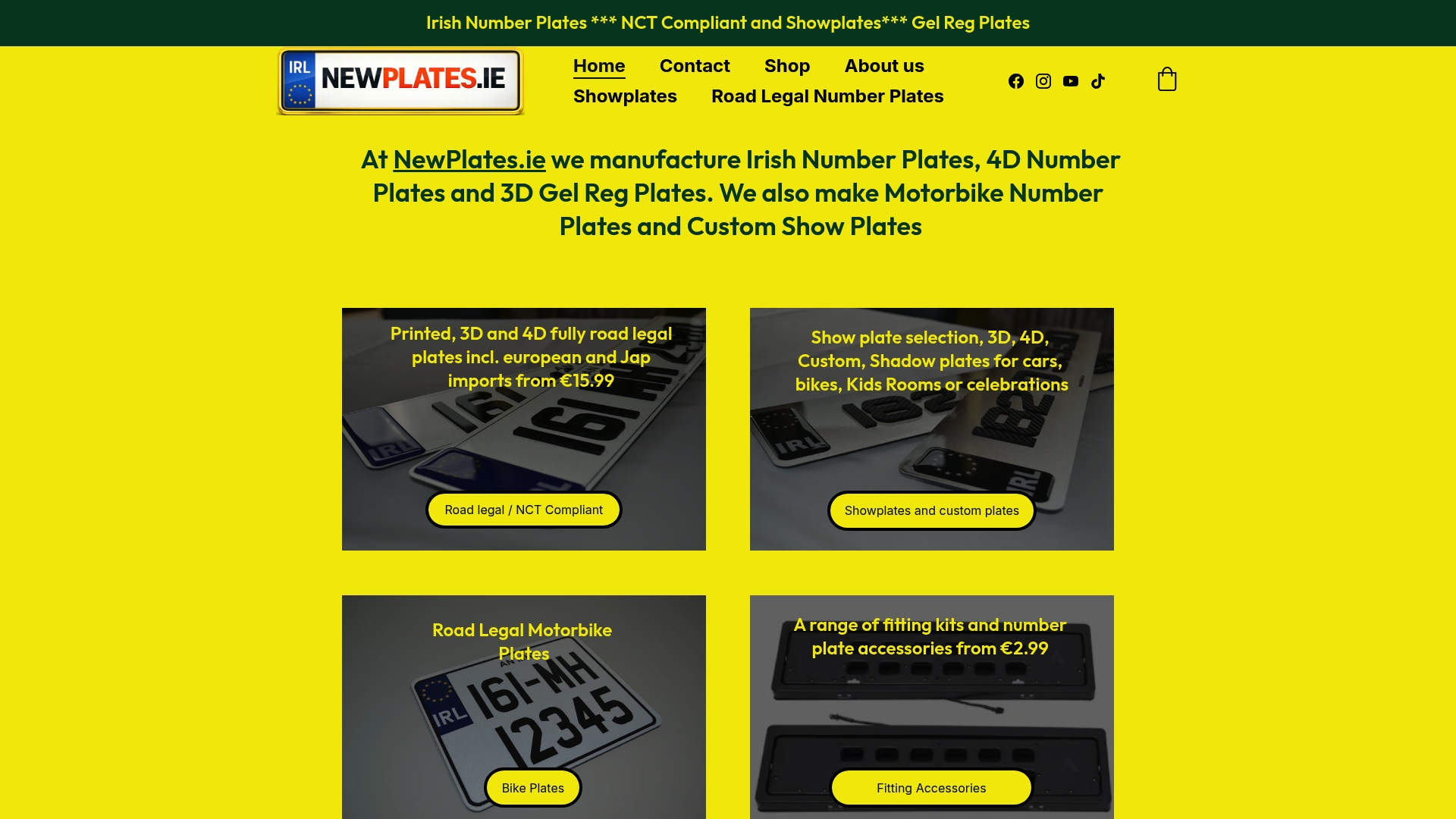
Whether you drive a daily commuter or a weekend showpiece, Newplates has a 3D gel option that fits. Prices start at €15.99 for standard plates, and the full range of custom number plates covers cars, motorbikes, and more. Browse the range at Newplates and order with confidence knowing your new plate is built to last and legal from day one.
FAQ
Are 3D gel number plates legal in Ireland?
Yes. 3D gel number plates are fully road-legal in Ireland when they use the Charles Wright 2001 font, solid black characters in the correct dimensions, and carry proper supplier identification as required by Irish road legislation.
How long do 3D gel number plates last?
A quality 3D gel plate has a typical lifespan of 3–5 years. UV-stable polyurethane resin resists fading and yellowing, and proper UV curing during manufacturing is the key factor in achieving that lifespan.
Can 3D gel plates fail an NCT inspection?
A plate can fail an NCT if it does not meet the required character dimensions, uses an incorrect font, or has reflective or decorative coatings that interfere with ANPR readability. Plates manufactured to the correct Irish standard will not cause an NCT issue.
What is the difference between 3D gel and 4D number plates?
3D gel plates use flexible polyurethane resin characters with a soft, domed gloss finish. 4D plates use rigid acrylic characters with sharp edges and a bolder, higher-contrast look. Gel is more subtle and impact-resistant; acrylic is more dramatic but can chip under minor knocks.
Do 3D gel plates require special cleaning?
No special products are needed. The smooth domed surface resists dirt build-up, so a damp cloth is sufficient for regular cleaning. Avoid abrasive materials that could scratch the gel surface.